Long-term Plan consultation

The Long-term Plan is the biggest conversation a council has with its community, and the 2027–37 round comes with a new purpose statement, a list of core services and tight pressure on rates. Your consultation document has to set out real options and trade-offs, the special consultative procedure has to run cleanly, and elected members need every submission in front of them before hearings. Spreadsheets, PDFs and email inboxes make that harder than it needs to be.
Ready to plan your 2027–37 consultation?
Citizen Space simplifies the special consultative procedure and makes it easy for everyone to have their say
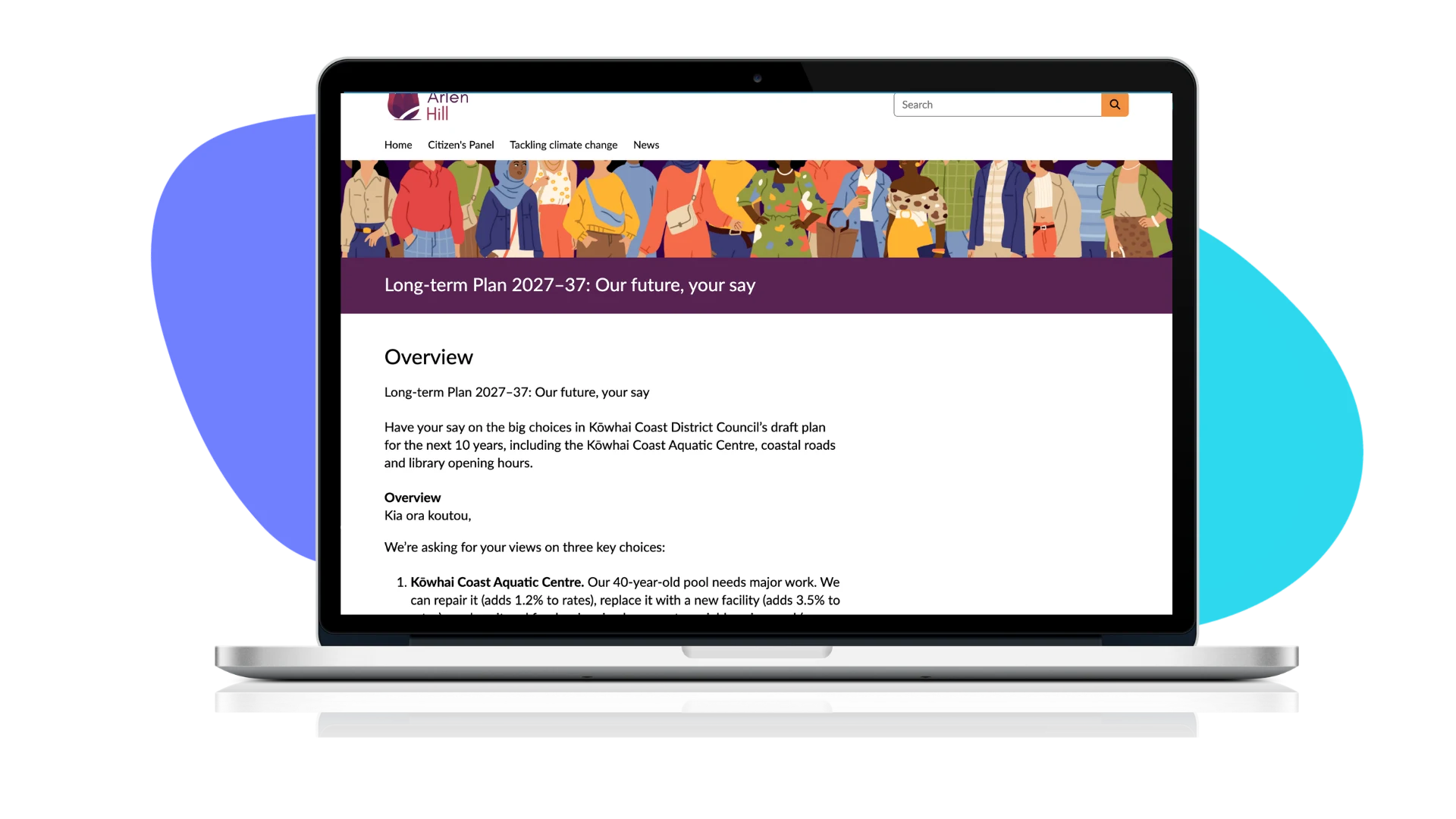
Put the choices up front Ask about each key choice with its options and the impact on rates and levels of service side by side. Link the consultation document and supporting information so submitters can go deeper without getting lost.
Remove the barriers No login. No registration. People can respond on their phone in minutes, upload a longer submission if they'd rather, and tell you whether they want to speak at a hearing.
Reach your whole community WCAG 2.2 AA accessible and mobile-first. Offer your site in te reo Māori. Add maps with Geospatial for projects by place, and use demographic questions to check you're hearing from every part of your district.
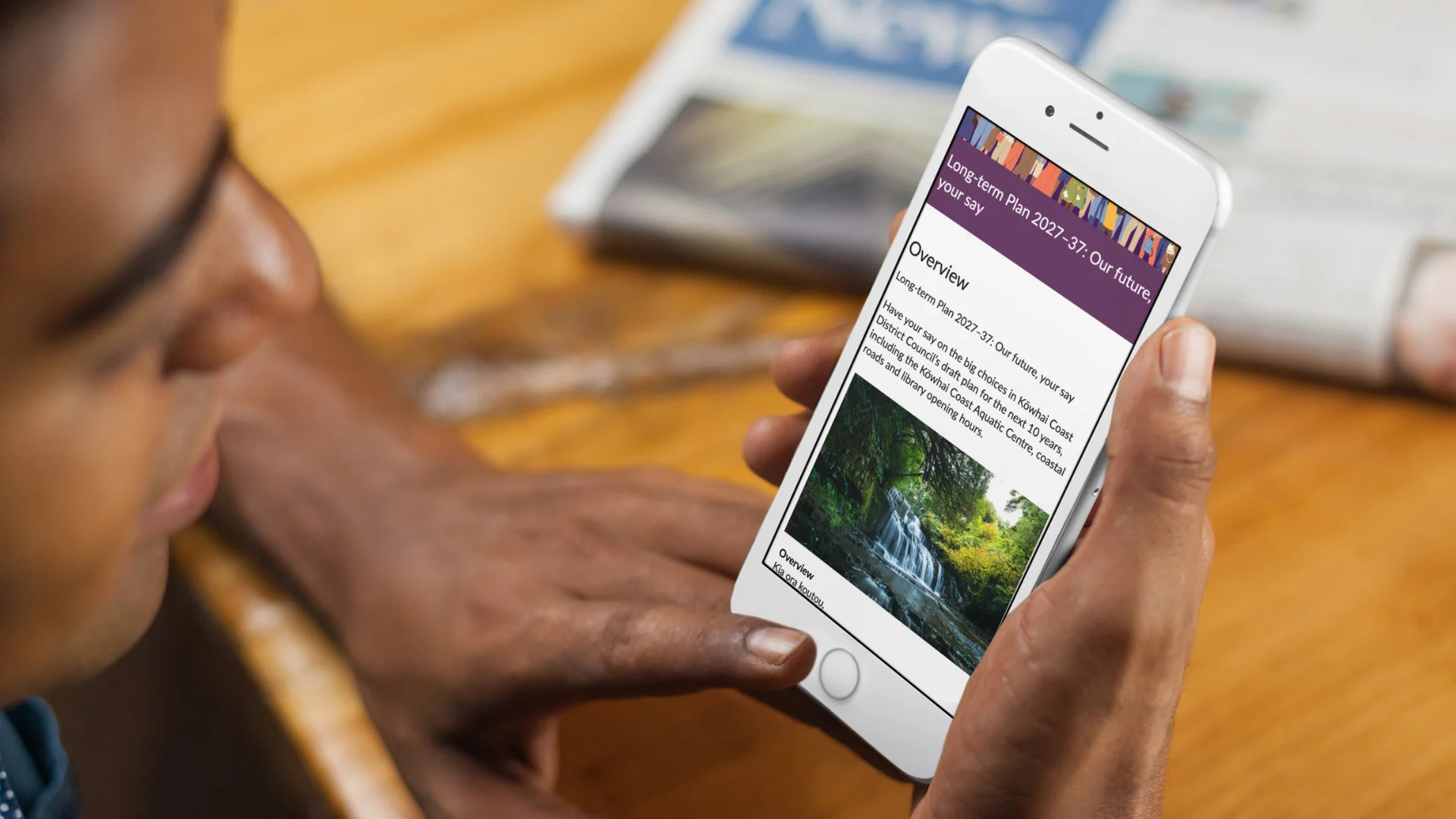

When you jump onto Citizen Space you're straight in there giving your say. There's no barrier to it. Citizen Space plays a huge part in actually getting a response rather than just giving a reaction.
Long-term Plan consultation in action
The Long-term Plan sits in a three-year cycle. Citizen Space supports every stage, from early engagement to annual plans in the years between, on one site your community already knows. You can even manage registrations for drop-in sessions and public meetings alongside your consultations.
Early engagement Ask about priorities before a word of the draft is written. Marlborough District Council asked residents what they want the region to be in 30 years before drafting its 2027–37 plan. Dialogue and the Simulator help people explore trade-offs too.
Long-term Plan consultation Publish your consultation document and run formal submissions on the key choices, with options, hearing requests and a full record for audit.
Annual plans In the years between, consult on changes from the Long-term Plan using the same templates, audience and site.
Policies alongside the plan Consult on your revenue and financing policy, development contributions policy, and fees and charges at the same time, linked from one place so submitters can find them all.

Get from submissions to decisions with confidence
See where your community stands Filter submissions by key choice, option, ward or topic. Spot themes quickly, compare responses by question, and export to Excel, Word or PDF, or push directly to Power BI.
Get ready for hearings See who wants to speak, export a hearing list, and give elected members a searchable view of every submission before they meet.
Show your working Publish submissions and a summary of what you heard, then report what council decided. A full record of the process is ready for audit.
Want to see how Citizen Space can simplify your next Long-term Plan?
Book a demo and we'll walk through your timeline, from early engagement to hearings and adoption.