Climate engagement

Local authorities and public bodies use Citizen Space to engage communities on climate action, build support for Net Zero, and shape climate strategies with public input.
Climate action requires public buy-in. Reaching Net Zero means asking communities to change how they travel, heat their homes, and use resources. Those changes only work when people understand why they're needed, feel heard about their concerns, and see how their input shaped practical solutions.
Citizen Space helps climate teams run engagement that makes complex issues accessible, reaches diverse communities, and builds the public support needed to deliver ambitious climate action.
Why climate and sustainability teams use Citizen Space
Make climate action tangible and local
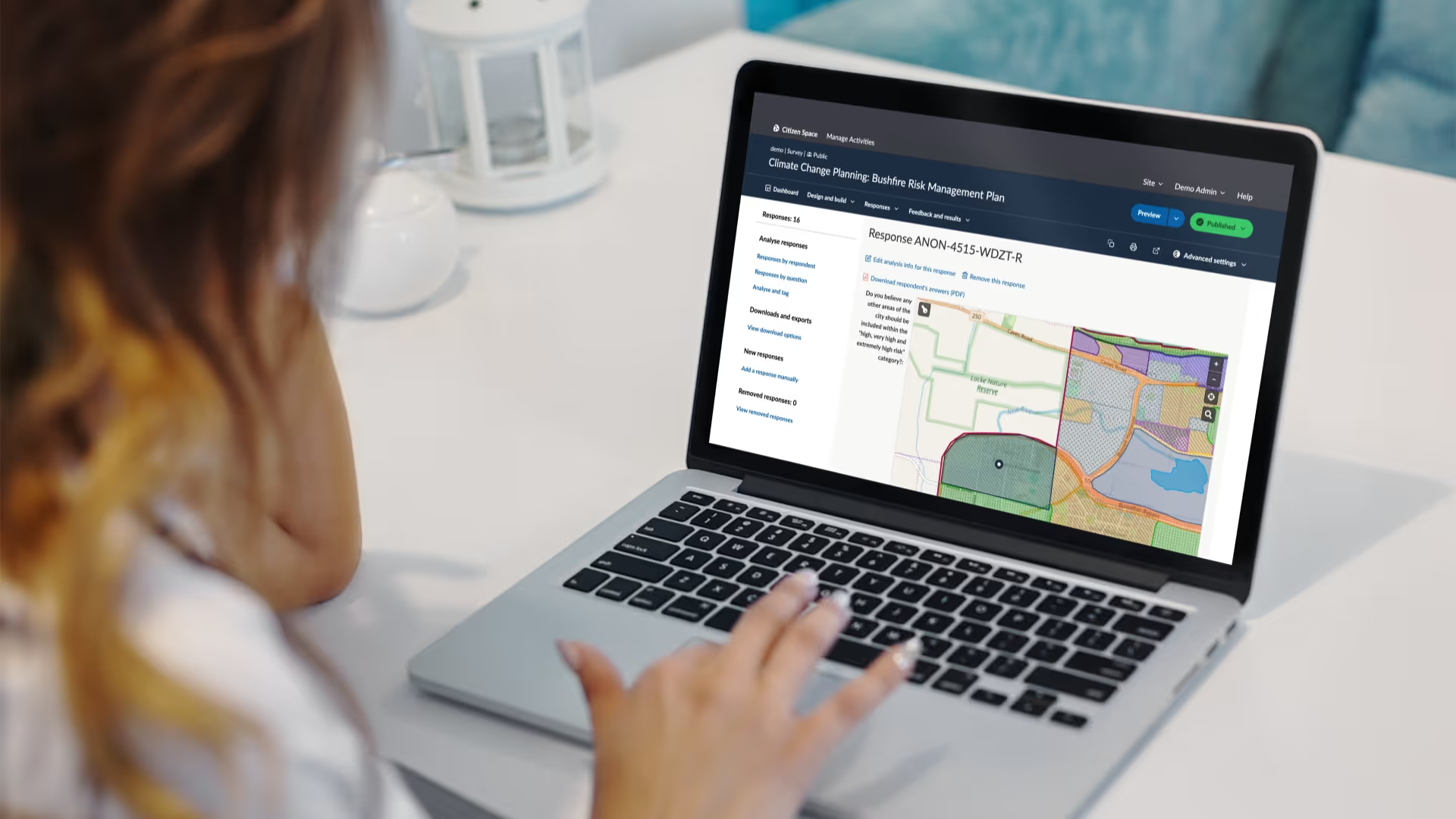
Climate change feels abstract until it's about your street, your commute, your energy bills. Use maps to show where tree planting is planned, which areas are at flood risk, or where EV charging points could go. Add infographics showing local carbon emissions or air quality. Help people understand climate action in terms of their neighbourhood, not just global targets.
Reach beyond the already convinced
Environmental activists will always engage but the challenge is reaching working families worried about heating costs, older people concerned about disruption, businesses facing changes to operations, and communities who don't see climate as their top priority. Make it accessible - plain English, mobile-friendly, no climate jargon. Meet people where they are, and provide rich context for nuanced questions.
Understand public concerns and trade-offs
Climate action involves difficult choices. Do people support road closures for tree planting? Which areas should be prioritised for home insulation? What would encourage modal shift? Ask specific questions about real decisions. Use different question types to understand both support levels and practical concerns. Get beyond "do you support Net Zero" to understand what people will actually accept.
Build support through transparency
Show communities how their input shaped climate plans. Explain which suggestions were adopted, which couldn't be accommodated, and why. Publish "You Said, We Did" summaries that demonstrate engagement mattered. Build trust for the next phase of climate action by proving the first phase listened.
Manage climate engagement at scale
Climate Action Plans generate thousands of responses. See all feedback in one dashboard. Code themes across qualitative responses about concerns and ideas. Filter by area or demographic to understand how climate impacts different communities. Export for your climate strategy documents. Turn overwhelming response volumes into structured insight.


We have turned the citizens' proposals into borough-wide policies and community-led action in this Climate Action Plan. This Action Plan represents the culmination of this work, and defines the first of two five year plans for how we will move towards zero carbon and address the crisis.
From climate response to net zero emissions
Achieving carbon net zero often involves complex regulatory steps alongside meaningful public engagement. Citizen Space brings both together in one platform, helping you run statutory consultations, gather expert evidence, and involve communities in the journey to net zero emissions.
Climate engagement in action
From Climate Action Plans to Net Zero strategies, Citizen Space supports the full range of climate and sustainability engagement. Run carbon reduction consultations, gather ideas for local action, and involve communities in environmental decisions all from one platform.
Climate Action Plans
Engage communities on borough-wide or regional climate strategies. Present carbon reduction targets alongside practical actions. Gather input on priorities - active travel, renewable energy, nature-based solutions, retrofit programmes. Show how public feedback shaped the final plan.
Net Zero pathways and carbon budgets
Consult on routes to Net Zero and interim carbon reduction targets. Help communities understand what achieving Net Zero requires in practice. Use scenarios to show different pathways and trade-offs. Build understanding alongside gathering views.
Active travel and transport decarbonisation
Engage on cycling infrastructure, Low Traffic Neighbourhoods, electric vehicle charging, or public transport improvements. Use interactive mapping to show proposed changes. Collect feedback on what would encourage people to change travel behaviour.
Nature-based solutions
Consult on tree planting, rewilding, green infrastructure, or nature recovery. Use maps to show proposed locations for woodland, wetlands, or urban greening. Gather input from communities about local environmental priorities.
Retrofit and home energy
Engage residents on home insulation programmes, renewable heating, or energy efficiency schemes. Understand barriers to uptake. Collect ideas about what support people need to decarbonise their homes.
Flood resilience and adaptation
Consult communities on flood defence, sustainable drainage, or climate adaptation measures. Use mapping to show areas at risk. Gather local knowledge about flooding patterns and what protection is needed.
How climate engagement works on Citizen Space
- Make it relevant and local: Translate global climate goals into local action. Show what Net Zero means for people's neighbourhoods, not just carbon targets. Use maps, infographics, and local examples to make abstract concepts concrete.
- Ask about real decisions: Structure questions around actual choices your climate strategy faces. Gather input on priorities, trade-offs, and practical concerns. Get beyond general support to understand what people will accept in practice.
- Reach diverse communities: Make it accessible for people who don't think of themselves as environmentalists. Plain English. Mobile-friendly. No climate jargon. Promote through community channels, not just environmental networks.
- Collect ideas alongside concerns: Use open text questions to gather community suggestions for local climate action. The best ideas often come from residents who know their area. Capture local knowledge and community-led solutions.
- Show impact on strategy: Publish summaries demonstrating how public input shaped your Climate Action Plan or Net Zero strategy. Explain which community suggestions were adopted. Build support by proving engagement influences real decisions.
- Build ongoing engagement: Don't just consult once on the strategy then go silent. Use Citizen Space for ongoing updates, feedback on delivery, and engagement on specific climate projects. Make climate engagement continuous, not one-off.


See how Citizen Space supports climate engagement
Book a demo and we'll walk through how climate teams use Citizen Space for Climate Action Plans, Net Zero strategies, and community-led environmental action.