Climate Simulator

Local authorities, environmental regulators, and public bodies use Simulator to engage communities on climate strategies by letting people experience the difficult trade-offs firsthand—balancing emission reductions, adaptation, costs, timelines, and local impact.
Climate action requires public support, but most people haven't grappled with the constraints you face. Simulator turns abstract goals into tangible choices, showing people what climate action actually requires and building understanding of why certain decisions need to be made.
Improving public participation in climate change planning
Turn climate goals into something people can grasp
Climate targets—Net Zero by 2050, climate-resilient by 2030, 30% emission reductions—these are goals, not decisions. Most people support climate action in principle but haven't considered what it means in practice. Simulator lets them allocate funding across mitigation, adaptation, nature restoration, and behaviour change whilst seeing the outcomes and costs of their choices in real time.
When people move the sliders themselves and watch the impacts change, abstract targets become concrete. They understand why you can't do everything at once and why some interventions cost more than others.
Build support by showing the constraints
Climate decisions are contentious because people don't see the trade-offs you're navigating. Simulator makes your constraints visible. When residents try to reduce emissions, prepare for extreme weather, restore nature, and keep costs manageable, they understand why some projects need to wait. When they see that flood defences protect homes now but tree planting reduces long-term risk, they grasp why these decisions are difficult.
You'll get more constructive feedback because people are working with the same information you are, not just reacting to proposals.
Reach beyond environmental activists
The people who respond to climate consultations are often already committed environmentalists. Simulator's interactive format appeals to people who wouldn't normally engage with climate policy—they're curious about the challenge, not necessarily passionate about the cause.
You'll hear from working families trying to understand how climate action affects their lives, businesses concerned about flooding and regulation, and residents who want cleaner air but worry about costs. These voices matter as much as the committed activists, and Simulator helps you reach them.
Gather meaningful priorities, not just support
Traditional climate consultations often produce predictable responses: people want everything done faster and cheaper. Simulator forces people to make actual choices. Do they prioritise flood defences or emission reductions? Protecting existing communities or building long-term resilience? Fast action or lower costs? Nature restoration or infrastructure?
You'll receive feedback that actually informs decision-making because people have engaged with the complexity rather than just expressing preferences.
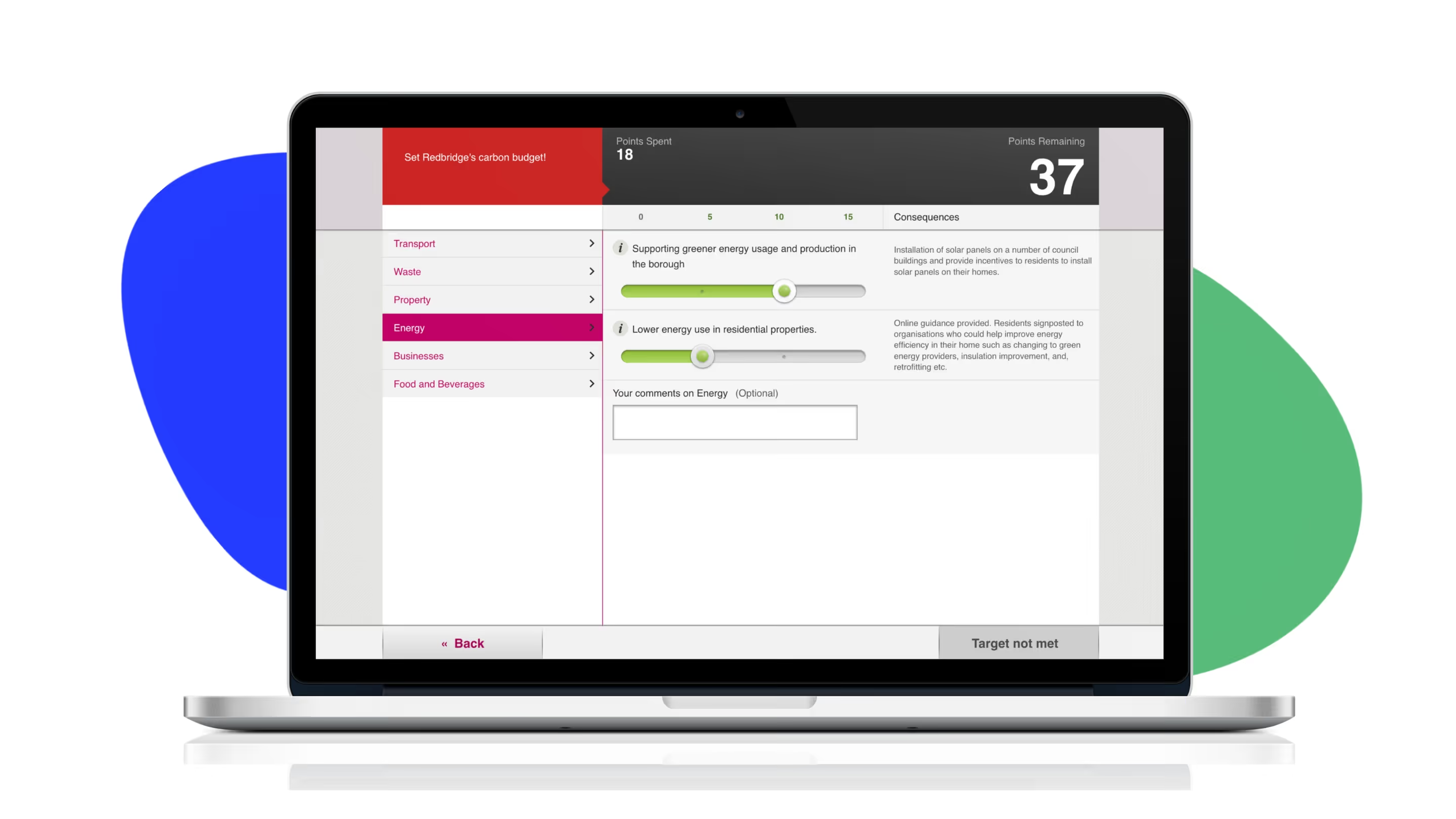

Simulator helped us test various actions the council could take to address Climate Change whilst understanding our residents’ priorities. The free text boxes also enabled respondents to comment on their response and offer further suggestions. The tool was very easy to set-up and use, enabling us to illustrate the difficult decisions we had to face, with one resident commenting 'it was difficult to choose which proposals should be regarded as a lower priority.

How to use Simulator to set climate priorities
1. Define your metrics: Frame choices around emissions, costs, local changes or other climate metrics, tailored to your climate plans.
2. Decisions are made via public input: Citizens move sliders and rank options based on perceived value, and see the consequences and pay-offs of climate decisions.
3. Track public participation: See responses and trends with centralised dashboards and live reporting.
4. Analyse and close the feedback loop: Export participant responses for detailed analysis and demonstrate the impact of public participation on climate action plans.
See how Simulator supports climate priority setting
To see how Simulator could help inform long term sustainable climate action plans, like supporting the route to Net Zero; request a free, no obligation demo.