Building an evidence base for the Oxford Local Plan with Citizen Space

The challenge
Oxford City Council is preparing a new Local Plan to guide development across the city over the next two decades. A Local Plan is one of the most significant documents a council produces, shaping housing, employment land, climate standards, heritage protection and much more, and it must be built on a sound, well-evidenced understanding of what matters to the community.
The Council wanted to get ahead of the formal, statutory consultation stages by gathering residents' and businesses' views early, before any policy approaches had been drafted. The thinking was sound: engaging people at the outset, when the plan is still taking shape, gives them the best possible opportunity to influence it. The Council was also keen to reach people who do not normally engage with planning, not just the usual stakeholders.
The challenge was to do this at pace. With a compressed timetable, the early engagement needed to be focused and efficient, testing how important a defined set of topics were to the public so that the most significant issues could be carried forward into the next stage.
The approach
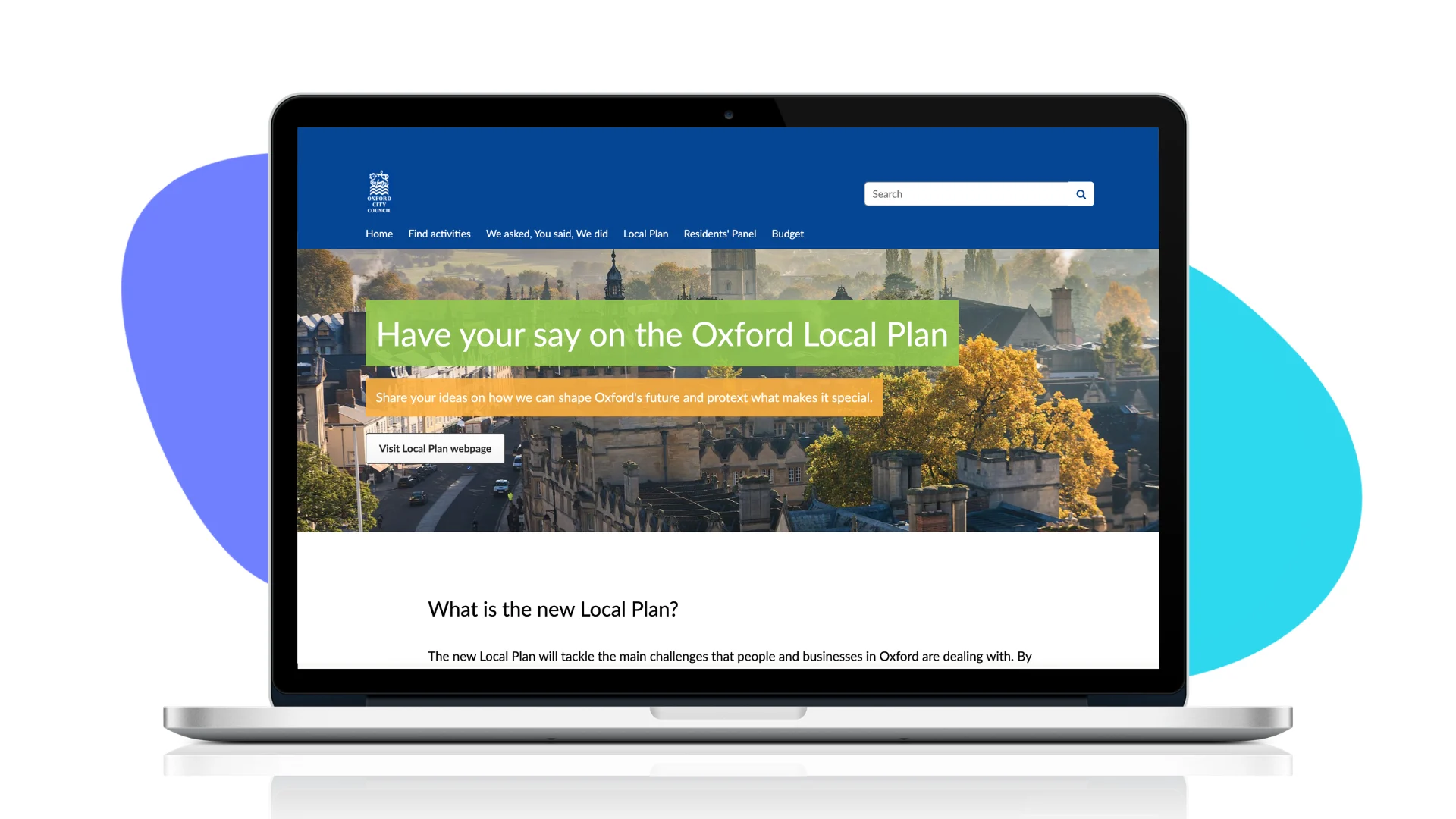
Oxford ran its early engagement survey on Citizen Space, open for six weeks from March to April 2025. The survey was promoted widely through the Council's website, social media, press releases, the Council newsletter, email lists, and posters in libraries and community centres, casting a deliberately broad net to reach beyond the planning-savvy audience.
The survey was carefully designed around seven key topics the Council had identified as central to Oxford's future: housing density, housing on employment land, affordable housing, carbon and climate standards, design and layout, biodiversity, and cultural heritage.
For each, respondents indicated how strongly they agreed or how important the topic was, producing clear, comparable data on where public priorities lay. This is exactly the kind of structured, topic-by-topic engagement Citizen Space is built to handle, turning a wide-ranging set of issues into measurable signal the Council could act on.
Crucially, the questions also captured the why, not just the what. Alongside the structured questions, open response options let people explain their reasoning and raise issues in their own words, and the Council accepted representations by email and post as well. That combination meant the Council came away with both a quantitative read on its seven priority topics and a rich qualitative picture of the concerns behind the numbers.
The results
The survey drew 185 responses, with around three-quarters coming from Oxford residents and a further significant share from organisations, companies and community groups, giving the Council a useful blend of individual and institutional perspectives at this early stage.
Recurring themes included a strong preference for developing brownfield land first, protecting and connecting the city's green spaces, ensuring sewage and flooding infrastructure can support new development, and aligning growth with community health and wellbeing. One site, Horse Fields in Iffley, drew particular passion, with 50 separate representations calling for it to be protected as green space, a vivid illustration of how engaged Oxford's communities are with the future of their local environment.

Turning early engagement into a plan
The real value of this exercise lay in what it set up. Because the engagement happened early, before policies were drafted, the findings could genuinely shape the next stage rather than simply validate decisions already made. The seven topics were ranked by importance, the areas of clear consensus were identified, and the points of genuine debate, such as density, were surfaced so they could be addressed head-on.
Those findings fed directly into the Preferred Options (Regulation 18) consultation that followed in summer 2025, and will continue to inform the plan as it moves towards submission. The Council's own conclusion captured it well: the engagement provided valuable insight into residents' priorities and concerns as the city begins to shape its new Local Plan, and the findings will play a crucial role in informing the next stage of consultation.
By publishing a full Early Engagement Report setting out the methodology, the data and the themes from the comments, the Council also made its evidence base transparent and traceable, an important foundation for a statutory process that will ultimately be tested at independent examination.
Why it matters
Oxford's early engagement shows Citizen Space supporting good planning practice from the very start of a Local Plan. Engaging the public before policies are drafted is widely regarded as best practice, but it only works if the engagement produces usable evidence. Here, a well-structured survey turned seven complex planning topics into clear, ranked priorities, while open comments and emailed representations captured the depth of local feeling on issues from green space to brownfield development.
The result was a solid, transparent evidence base that the Council could carry forward with confidence into the formal consultation stages. For a city as engaged and as carefully scrutinised as Oxford, getting that foundation right matters, and a structured, accessible digital engagement tool is exactly what makes it achievable at pace.
Delib is a govtech leader specialising in consultation and engagement, trusted by over 600 government organisations worldwide, including major planning projects. Since 2004, we've been building secure, accessible digital platforms to make participation simpler, fairer, and more inclusive. Our flagship product, Citizen Space, was built in collaboration with the UK government and has supported more than 11 million responses across over 110,000 democratic activities.