When is a consultation 'good enough'? Setting realistic standards for public engagement

One of the most common questions from those facilitating public engagement is ‘what does good enough actually look like?’. This is particularly true for those facilitating public engagement that has regulated requirements around quality. The following article discusses the common traits of a well-run consultation process.
Types of consultations
A consultation is technically any activity where someone seeks the views or opinions of another in a way that is documented formally. However, when it is conducted by a public body or an organisation that works with the public, it tends to refer to one of three things.
Surveys and informal consultations
The first type of consultation activity is the least formal. This is where participants are asked to take part in a survey or similar, with the aim of collecting data on their views. This data may be used for a variety of purposes, and may even be used for multiple purposes over a long period of time.
For example, a resident satisfaction survey may be conducted by a social housing provider each year. The data from this survey may be used to inform decisions like:
- Where to prioritise repairs.
- Where to invest additional funds.
- How to communicate better with residents.
- How to address antisocial behaviour.
Crucially, in this kind of informal consultation, the purpose does not need to be made explicit and there is no particular regulation governing how the consultation must be conducted.
Public consultations
Public consultations are far more formal. They often form part of complex legal processes, such as planning applications. In a public consultation, facilitators must therefore ensure that:
- Consultations are accessible and inclusive, and this is reflected in a representative sample of the citizens being consulted.
- The purpose and scope of the consultation is clearly defined.
- How responses were used and accounted for in subsequent decisions are clearly explained and fed back to respondents.
“Consultations give people in all walks of life a chance to get involved in the work of government. Consultation is an important part of the policy-making process.”
- Government of Northern Ireland
Statutory consultations
A statutory consultation is a type of public consultation that is legally mandated, and must occur before a given decision is made or policy comes into effect. They are run by public bodies and governments and typically relate to matters that will have significant effect on citizens, such as:
- New infrastructure projects.
- Large housing developments.
- Changes to health and social care provision.
- Developing a Local Plan.
There is a great deal of regulation of statutory consultations, including which stakeholders must be consulted, the period of time the consultation must run for and the ways in which the public must be engaged in the process. It is essential to plan a statutory consultation process carefully, in order to avoid the possibility of legal challenge.
Who needs to be involved in the consultation process?
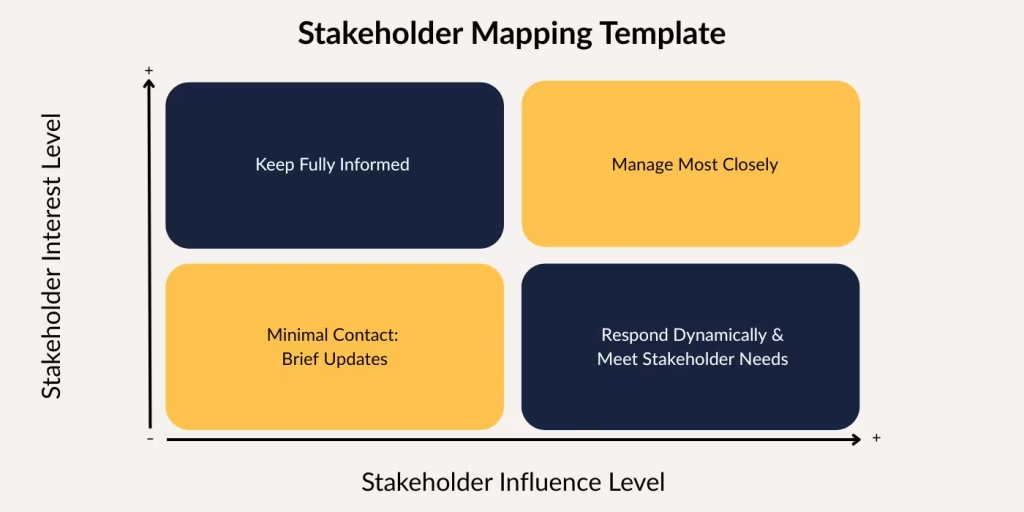
Who exactly needs to be engaged as part of a consultation process will depend on a number of factors, such as:
- Consultation type, particularly whether or not the consultation is statutory and therefore includes statutory consultees.
- The topic of the consultation, as different sectors have different regulators and requirements.
- Who is likely to be affected most by the consultation or has power over the outcome (e.g landowners, relevant businesses etc.)
In order to ascertain who must be consulted and the most effective way to engage those individuals or groups, facilitators will often conduct a stakeholder mapping exercise. This allows them to clearly map out all relevant stakeholders to a given project. Stakeholder mapping should take into account those affected by a proposal and those required by relevant legislation to have an input.
Again, how thorough this process must be - or what is considered ‘good enough’ depends largely on the type of consultation. For an informal consultation, one may be able to say that it is good enough if it seems to roughly include affected parties and different viewpoints. For a statutory consultation, only a comprehensive inclusion of all relevant stakeholders will meet minimum requirements.
Common signs of a well-run consultation
Although every consultation is different - particularly across different sectors - there are some common signs a consultation process is being conducted well.
They are well planned
Like many things in life, the key to an effective consultation is usually good planning. This includes stakeholder mapping as mentioned previously, but also should encompass every aspect of the consultation process.
Through planning ahead, everything from the timing of the consultation to the engagement methods used to how data is used and feedback given can, can be run more smoothly and therefore involve the public more effectively.
They have multiple engagement methods
Every citizen is different, and therefore it would be impossible to engage everyone in the consultation process through the same methods. While the necessary scale of engagement depends on the type and scope of the consultation itself, all consultations must consider and implement an appropriate engagement strategy.
While one member of the public may be best engaged via social media, another may be most likely to learn about a consultation via a local newspaper. In some areas, it may be useful to contact community leaders or local councillors, or even put individual letters through doors. What is ‘good enough’ is what allows a consultation to reach their intended demographic effectively.
Accessibility and inclusivity as a standard
Of course, a large part of reaching everyone who should be consulted is ensuring that a consultation process is both accessible and inclusive. This is a legal requirement for public and statutory consultations, and should be standard for any consultation type.
Accessibility and inclusivity means ensuring:
- Consultation questions and supporting documents are written in plain language where possible.
- Translations are made available where possible.
- Versions for those with specific disabilities are available and easily accessed. If using an online platform, that means making sure the platform is WCAG 2 compliant.
When it comes to accessibility and inclusivity, ‘good enough’ means that no one is excluded based on their background, disability or any protected characteristic.
They take advantage of community and citizen engagement tools
One of the most important common traits of a well-run consultation in the last decade is that they take advantage of the most effective GovTech, typically in the form of purpose-built engagement platforms.
In the past, consultations were conducted using paper forms that had to be collected and manually analysed, often ending up stored and forgotten. This process had little transparency and was very arduous and resource-intensive.
As digitisation became more common, consultations began to take advantage of some tools such as spreadsheets, email consultation responses, and online databases. This was an improvement, but still had a variety of issues. Data-loss, lack of version control and inaccessible formatting still caused a great deal of unnecessary work and sometimes caused barriers to engagement for participants.
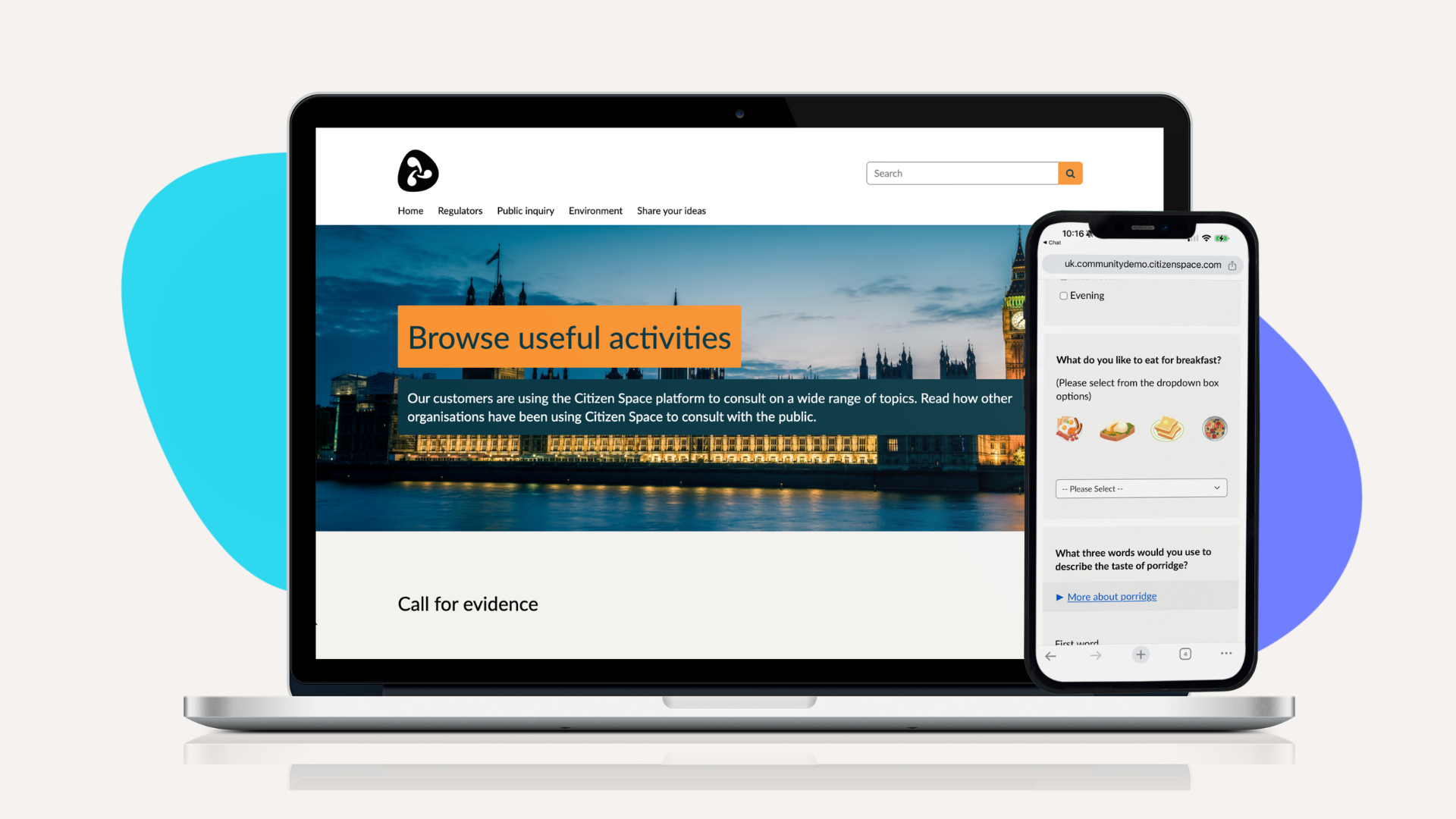
Now, purpose-built consultation platforms are quickly replacing these general-purpose tools as the best way to run consultations. These platforms have been designed to allow participants to view information, provide inputs and receive feedback all in one place. Citizen Space also has built-in analysis and advanced tools for both participants and facilitators, such as geospatial mapping capabilities.
A consultation that is ‘good enough’ must use digital tools that are good enough to ensure a smooth consultation process.
They meet regulations and requirements
Finally, the clearest sign that a consultation is meeting minimum requirements is that they are meeting all relevant regulations. Regulations apply to all public consultations, but there are many particular regulations around statutory consultations that must be adhered to.
Understanding all relevant regulations and requirements is step one. Ensuring they are embedded in and met by all stages of the consultation process is the next step. This is another point at which purpose-built platforms can be a significant help, as many will provide templates for consultation types that can automatically meet many standard requirements.
Even informal consultations have some requirements, particularly around inclusion and accessibility. A consultation that is ‘good enough’ will anticipate regulations and requirements and plan for them.
What can’t a consultation process do?
There are some things that a consultation can’t do, regardless of how well planned or executed it is. It is therefore important that facilitators understand the limitations of the consultation process. For example:
- A consultation process cannot force members of the public to participate if they don’t wish to. If appropriate efforts have been made to engage and there are no clear barriers to participation that can be mitigated, then the facilitators have met their duty.
- Consultations cannot necessarily please everyone. A consultation must listen to and respond to every viewpoint, but that does not mean that the plans or policies produced as a result of consultation can please every participant. Instead, they often create a series of compromises.
- A consultation process cannot replace decision-making authority. While it gathers evidence, perspectives, and preferences from stakeholders, the final decision still rests with elected officials or designated bodies, who must balance consultation feedback with legal, financial, and strategic considerations.
Citizen Space is the go-to govtech platform for engaging with citizens, managing large scale government consultations and simplifying statutory processes. If you’d like to learn more about how our software can be used for public consultations, book a free demo today.
Sign up for the Delib newsletter here to get relevant updates posted to your email inbox.