How to plan and run a statutory consultation

For many planning decisions in the UK, a statutory consultation is a legally required part of the process. However, beyond simple box-ticking, statutory consultations can be an opportunity.
They are a chance to build trust with the stakeholders and communities affected by a given policy, plan or project. They can also help develop policy in a way that is mutually beneficial for policy-makers and citizens.
What Is a statutory consultation?

A statutory consultation is a type of public consultation that must happen in order for a planning process to be considered legal and legitimate. They are run by governments, the local authority and other public bodies, where those bodies are legally required to consult specific individuals, groups or communities about particular planning decisions or policies.
As statutory consultations are requirements embedded into legislation, failure to conduct them appropriately can result in legal challenges, project delays, or planning decisions being overturned.
It is a common statutory requirement for public bodies to consult citizens in the UK. They are particularly common for certain types of projects and plans, such as:
- Developing a Local Plan. At the beginning of developing a new Local Plan, councils are required to consult local residents before submitting a planning application.
- Building new large housing developments, particularly if it involves using legal powers like Compulsory Purchase Orders.
- Proposing new Infrastructure projects, like new roads or transport systems, which have a requirement to consult under the Planning Act 2008.
- Making changes to health and social care provisions.
- Developments that could have a significant impact on the environment. For these, a statutory consultation is required as part of an Environmental Impact Assessment.
Voluntary public consultations, which organisations may carry out to better understand the public view of a given project, can be carried out with varying standards and degrees of formality. Statutory consultations however, have strictly defined processes, timelines, and reporting obligations.
There are various pieces of legislation that set out how statutory consultations must be run in order to meet requirements. However, the overarching framework that all statutory consultations must follow in order to be valid are the Gunning Principles.
The Gunning Principles
The Gunning Principles outline four key requirements that all public consultations in the UK must follow. These principles have become the standard framework for assessing whether a public consultation has been conducted lawfully.
The Gunning Principles set out the following:
- Public consultations should be held at an early stage in the policy-making process, while the plan, policy or project is still being developed.
- Participants must be given adequate time to review the proposals and provide input.
- Sufficient information must be made available to the public in order to fully understand and assess the proposed plan, policy or project.
- All feedback must be properly considered before any final decisions are made or actions taken.
What are statutory consultees?

Statutory consultees are organisations or bodies that legally must be consulted during certain planning or policy-making processes. They're often named in legislation because they have a regulatory role over a certain sector, have specialist knowledge, or represent the interests of those likely to be affected by a proposed change.
The bodies that may be statutory consultees will depend on the type of plan, project or policy. It may also depend on the geographical area it relates to. There are hundreds of bodies that may be listed as a statutory consultee according to regulation in a specific sector. Just some examples of statutory consultees include:
- City, District and Parish Councils.
- Local environmental agencies, such as the Environmental Agency, Natural England, the Mining Remediation Authority, the Canal and River Trust, etc.
- Transport and transport infrastructure authorities like Highways England and Network Rail.
- Relevant government departments, such as DEFRA or DESNZ.
Involving statutory consultees early helps avoid delays, as their input often shapes the design of a project or plan. It can also flag issues with viability, which can save time and resources if addressed early in the consultation process.
"Statutory consultees play an important role in the planning system, providing expert advice and information on significant environmental, transport, safety and heritage issues to ensure good decision-making. However, their involvement introduces additional requirements into the process of securing permission for some developments."
- Matthew Pennycook, Minister of State for Housing and Planning.
Running a statutory consultation
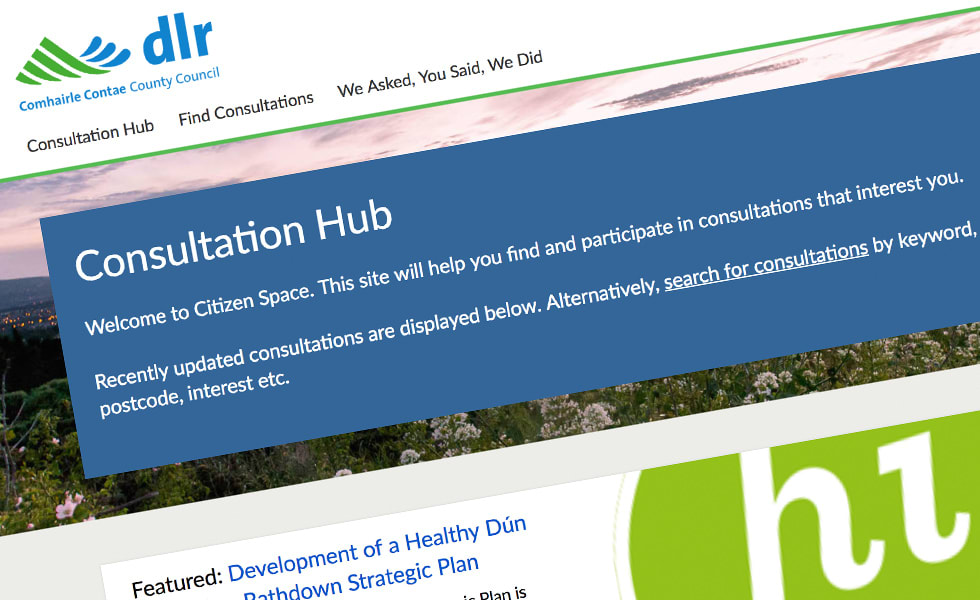
Running a statutory consultation need not be particularly complicated, especially when approached with a clear plan. A well-planned approach means that a consultation will meet the legal obligations outlined above. It can also provide opportunities for meaningful engagement and a discourse that will benefit the project.
There are several steps to planning and running an effective statutory consultation:
1. Understand the legal requirements
The first step in planning a statutory consultation is to understand what is 'statutory', what is recommended, and what may be useful if resources allow.
Legally speaking, different sectors and areas of policy have different frameworks and thus slightly different requirements. These frameworks decide:
- Who the statutory consultees are.
- What other communities and individuals should be consulted.
- How long the consultation should run.
- What information should be provided to participants, and what questions should be asked.
- How responses to the consultation should be handled.
For example, the framework that covers large infrastructure projects (usually called NSIPs), is the Planning Act 2008. This framework states that the public, local authorities and specific statutory bodies like Natural England and the Environment Agency must legally be consulted on all new NSIPs.
Once those who must be engaged are established, it is possible to think about who may be consulted in order to further enrich the consultation process. These can be considered when mapping relevant stakeholders.
2. Identify and map stakeholders
While statutory consultees are named in legislation, there are almost always other stakeholders who should be engaged. This could include affected communities, related organisations or interest groups, or anyone who has a say or stake in a plan or policy.
Stakeholder mapping can be used to identify all those relevant to a given project. The individuals and groups identified can then be sorted according to the power they have over a given project or policy (such as regulatory powers or land ownership), and their interest in it (how much it will affect or potentially benefit them).
This allows consultation planners to identify who needs to be consulted and who it may be beneficial to consult. This can help establish a tailored engagement plan for the consultation going forward.
3. Know what resources are available
Once it is established who the primary participants will be, it is useful to know exactly what resources the consultation has available.
Resources are about more than simply funding. Resources include staffing; the experts, administrators and officials that will run the consultation. It also includes access to GovTech and other tools that can significantly reduce the manpower and time necessary to conduct an effective consultation.
4. Establish a timeline
In a statutory consultation, timeframes are set out according to law. Planning ahead to make sure that a consultation will meet the legal timeline is therefore crucial. This will include:
- Planning time. Making sure those running the consultation have time to consider and act on the above considerations.
- Time to promote the consultation, including engaging key stakeholders.
- Setting a date for the consultation to launch and a date all responses need to be received by. This period is legally defined, and is usually between 4 and 12 weeks depending on the sector.
- Time to analyse data and produce reports.
- A date to make the results of the consultation public.
Unexpected delays can be an issue when a timeline must be strictly adhered to, so it is important to plan carefully and anticipate potential issues ahead of time.
5. Communicate clearly with participants
In order to meet statutory requirements, participants must have access to the information they need to give an informed response. Therefore communication should be presented in a clear way, including being made available in accessible alternative formats. It should have both the information directly relating to the questions, and contextual factors that may be relevant.
It can help to use visual aids in order to both help participants to understand the issue fully, and to help those running the consultation to get a full understanding of participant meaning. Geospatial mapping tools are particularly useful for this, especially where consultations relate to the use of physical space (such as urban planning consultations).
6. Analyse data and create reports
Once all the responses to a statutory consultation have been received, they can be analysed and reported back on.
If a consultation has involved a large number of responses or a great deal of documentation, this can be particularly resource-intensive. Time must be put aside to draw out common themes, and potentially code those responses in order to better see emerging patterns in the data. Digital consultation tools can be used to aid in the analysis process, and can also be used to turn that analysis into reporting and feedback for participants.
Giving feedback on statutory consultations
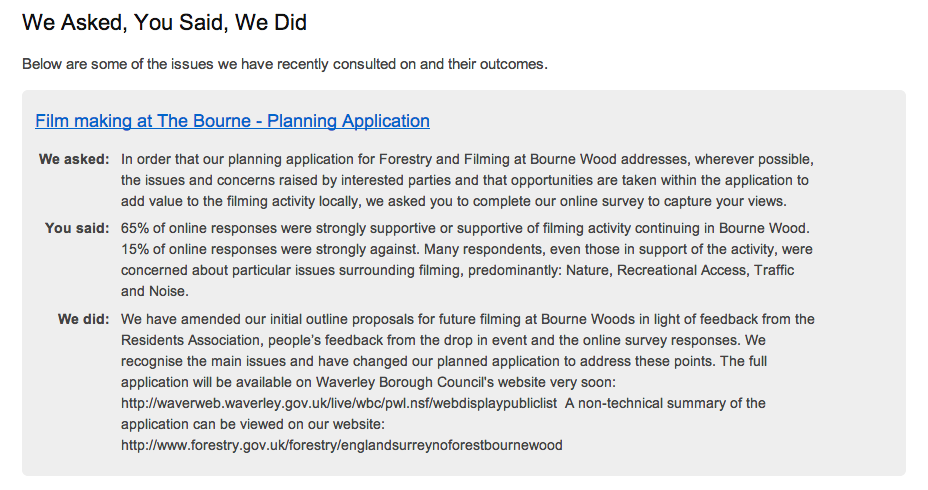
Providing feedback from any consultation is a necessary part of closing the feedback loop. It builds relationships between public bodies and participants, and creates a culture of trust and transparency with the wider public. In a statutory consultation it is also often legally required.
Feedback can take many forms, but commonly involves:
- Outlining common themes and issues raised in responses.
- Explaining which responses were most influential and how they affected the project.
- Clarifying which concerns could not be mitigated, and why.
- Discussing what happens next in the process.
- Explaining what lessons were learned during the consultation process, and the steps taken to address those lessons in future.
It's important to provide feedback so participants feel listened to and so policy-makers can demonstrate their adherence to legal requirements. Systems that integrate response-collection, analysis and feedback like Citizen Space can simplify things by providing a "one-stop shop" for participants. Feedback can then also be shared more widely on public platforms like social media.
Feedback is the final step in the consultation process, and so it is important to get it right. Statutory consultations in particular benefit from a robust feedback process.
Citizen Space is the go-to platform for connecting governments, developers, and citizens. If you'd like to learn more about how our software supports the statutory consultation process and streamlines public engagement, book a free demo and we'll walk you through it.
Sign up for the Delib newsletter here to get relevant updates posted to your email inbox.