Transport Simulator

How transport is funded, designed and prioritised affects everyone. Government and transport bodies work closely to develop new transport infrastructure that aids the public, without disrupting local communities. Hearing their priorities and preferences is an instrumental part of any new transport plans - TROs, bus and cycle lanes and beyond.
With Transport Simulator, citizens can see the real world impact of proposed changes, establish their priorities and understand trade-offs via interactive public participation.
Why transport authorities use Simulator for priority setting
Make infrastructure trade-offs visible
The public sees congestion, poor bus services, and inadequate cycling infrastructure but not the choices behind them. Why does a new tram line cost more than twenty years of bus improvements? Why can't every road have protected cycle lanes? Why do some transport projects take decades to deliver?
Simulator lets people allocate your actual budget or investment capacity across competing priorities—public transport, cycling infrastructure, road improvements, electrification, pedestrian safety—and see what happens when they prioritise one over another. When people try to fund everything adequately, they understand why these decisions take time and require difficult choices.
Turn wish lists into informed priorities
Traditional transport consultations often produce wish lists where people want everything improved simultaneously. Simulator forces actual choices with real consequences. Do they want a tram system or improved bus services? Protected cycle lanes or better road maintenance? Fast delivery or lower costs?
When Bristol City Council used Simulator to explore major transport infrastructure changes—trams, underground metro, improved rail routes—residents had to balance their preferences against budgetary considerations and wider city impacts. The council's Transport Policy Manager noted:
"I have received a number of comments on how easy it is to use and I am convinced that having the Simulator tool has encouraged more people to take part in the consultation than using traditional consultation methods."
Build understanding through the process itself
Simulator makes people more informed by participating. When residents balance transport priorities themselves—adjusting sliders and seeing real-time consequences—they gain appreciation for the complexities you navigate every day.
Glasgow City Council divided their 10-year transport plan into 15 categories and gave respondents 30 points to allocate. Each time someone adjusted a slider, they saw the likely impact of their decision. As Glasgow explained:
"This embedded information informs at the point of response, meaning that there is absolutely no prior knowledge required on the part of the respondent. What results is rich, insightful, informed feedback."
Reach people who care about transport, not just activists
Traditional transport consultations often hear from committed cycling campaigners or organised opposition to specific schemes. Simulator's interactive format appeals to everyday transport users—people commuting to work, parents doing school runs, residents concerned about air quality—who wouldn't normally respond to a consultation but are affected by your decisions every day.
Over 100 organisations globally have used Simulator to engage communities on transport priorities, getting broader participation than traditional consultation methods.
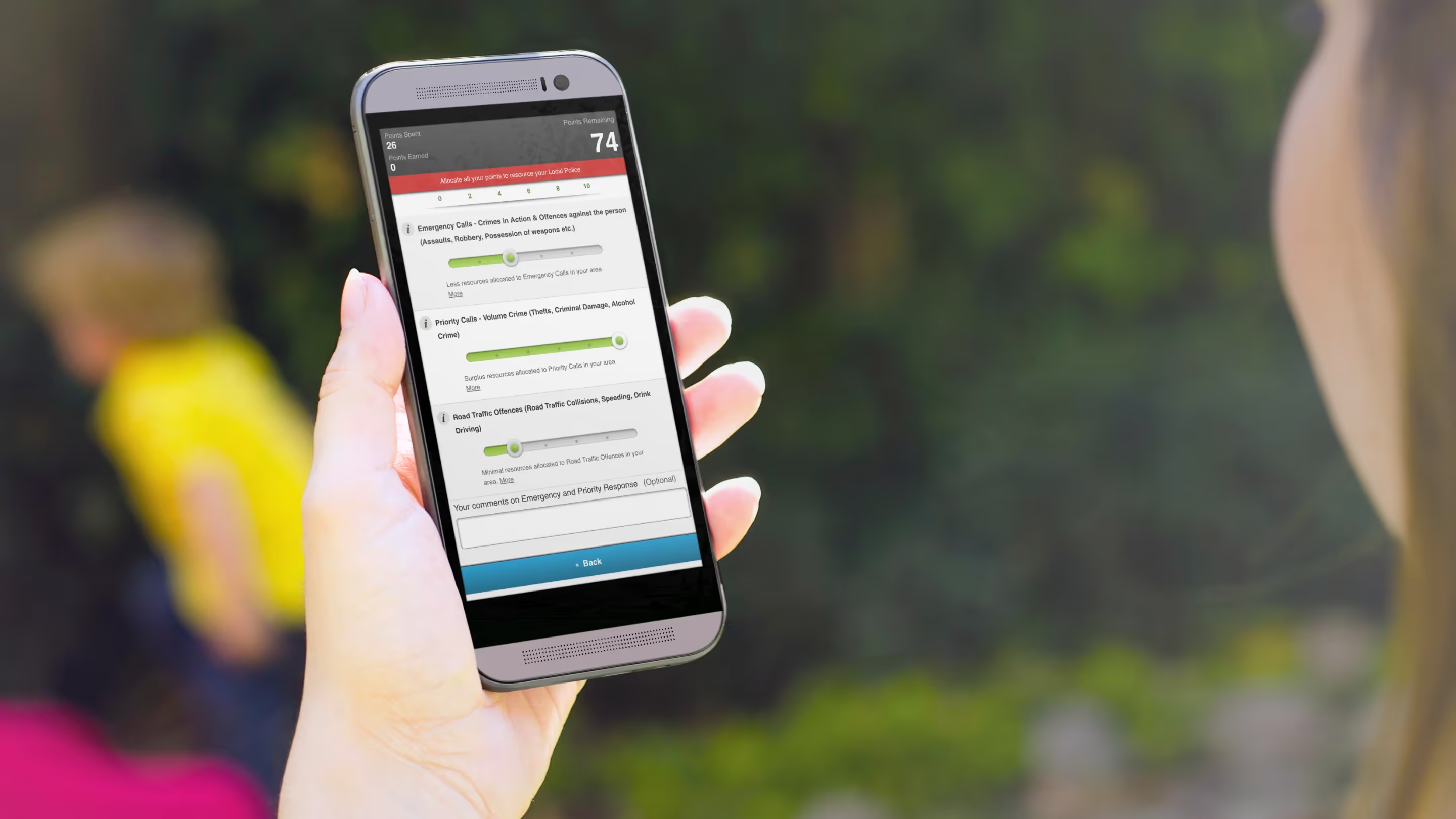

“The Priority Simulator tool has provided a more engaging way for our citizens to get involved in the consultation process. I have received a number of comments on how easy it is to use and I am convinced that having the Simulator tool has encouraged more people to take part in the consultation than using traditional consultation methods.”
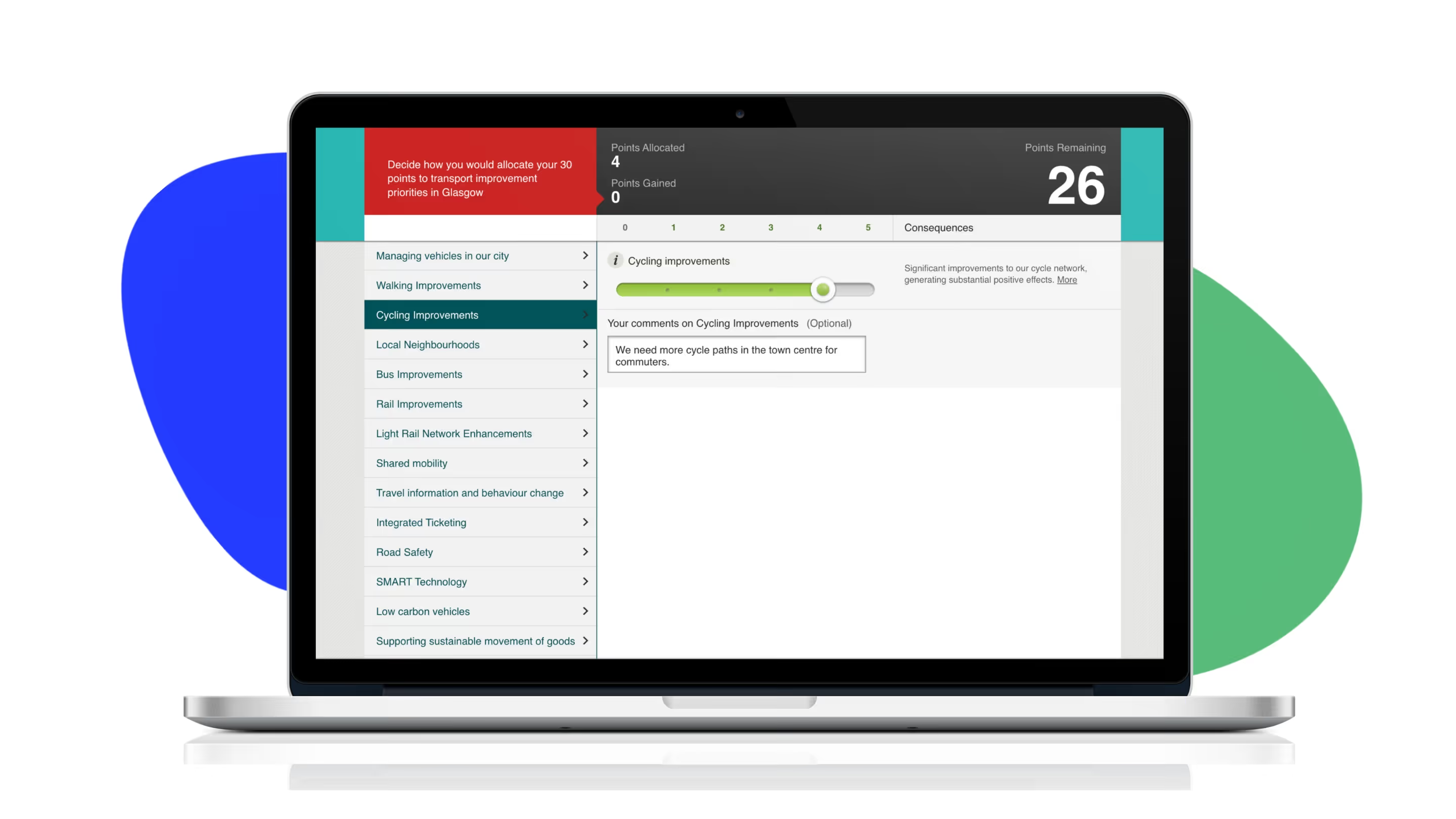
How to use Transport Simulator
1. Define your metrics: Choose how to display choices to the public using metrics like the transport budget, spatial trade-offs, or policy choice.
2. Citizens respond & define priorities: The public move sliders and rank options, seeing the consequences of specific choices and their trade-offs.
3. Easy monitoring: Track responses in a centralised dashboard with easy-to-read headline stats.
4. Receive detailed analysis: Get detailed breakdowns of participants responses and use it to inform transport planning.
See Simulator for transport in action
To see how our Transport Simulator will help generate informed transport schemes, plans and TROs, sign up for a free, no obligation demo and see Transport Simulator in action.