Impact in practice: North Northamptonshire Council
North Northamptonshire Council was created in 2021, bringing together four former sovereign councils to serve around 380,000 residents. Five years on, its Citizen Space site tells a story that goes well beyond any single consultation. Hundreds of published activities, spanning a huge variety of topics, show an organisation where asking people first has become simply how things get done.
A whole council, in the open
Scan the council's recent published activities and the breadth of activities is striking. Within a few short months you'll find everything from a scoping consultation for the new Local Plan, to a survey for mums-to-be about staying active, a review of taxi driver knowledge testing, and a notice about four trees on one street in Wellingborough.
It's a snapshot rather than the full picture, but it gives a real sense of the plates local authorities keep spinning at all times, from the smallest hyperlocal question to the biggest strategic decision.
Planning policy, public health, community safety, housing, licensing, education, leisure, finance. Every corner of the council is represented, and not just with headline projects. Cemetery regulations sit alongside CCTV renewals, school term dates, gambling licensing principles and neighbourhood plan submissions. Some of these are legal duties. Others are the council choosing to listen to its residents about the things that matter most.
That mix is important. Flagship consultations show ambition and transparency but the steady weekly rhythm of smaller ones shows something else—a culture of engagement built from the ground up.
When it came to finding the right engagement platform to run everything North Northamptonshire chose Citizen Space. Simple enough to use that anyone can launch a staff survey without friction. Robust enough that the same system carries the council's most heavily scrutinised statutory work. That flexibility is what lets consultation become routine, because nobody has to choose between the easy tool and the proper one. They're the same thing.
A council consulted into existence
Merging councils is as much a question of identity as it is of structure. Residents of four areas, each with its own council, its own services and its own way of doing things, had to start seeing themselves as part of one organisation. North Northamptonshire's answer from the very beginning was to invite people into the process.
Before the new council formally existed, residents were asked to help choose its logo. They gave views on customer service opening hours, on the council tax support scheme, and on the first ever draft budget. Small asks in some cases, but each one a signal: this new council is yours, and it's listening before it's even open. In early 2022, the young council went a step further and consulted on its Statement of Community Involvement, the statutory document setting out how it would engage. It asked people how it should ask people.
The harder work of harmonising four sets of policies then continued in the same spirit. A 2022 garden waste consultation set out plainly that residents in Corby and Kettering had a free year-round service, Wellingborough a seasonal one, and East Northamptonshire a £55 annual charge, and asked how to make that fair. Taxi licensing followed a similar path, from four sovereign policies and four fare zones to a single zone by 2025, consulted at each step. More recently, a consultation on the future of leisure services tackled the different legacy arrangements inherited in each town.
With reorganisation now ahead for much of local government, and the first new unitaries due to begin operation in April 2028, this is the part of North Northamptonshire's record worth studying most closely. Every new council will inherit the same challenge: multiple legacy policies, one set of residents. Engagement won't resolve every difference, but it gives a brand new organisation something it otherwise lacks: a relationship with its public that starts on day one, or earlier.
Closing the loop on a £431m decision
Like many councils, North Northamptonshire has had to balance growing demand for services that protect its most vulnerable residents, particularly adult social care and children's services, against a backdrop of continued national financial uncertainty. Its proposals for 2026/27 focused on protecting and investing in local frontline services within a net revenue budget of £431 million.
The council was clear about why it was asking: it described the consultation phase as essential to the budget setting process, so that residents' and stakeholders' views could inform councillors before final decisions were made.
Residents responded 242 times on proposals including a 4.99% council tax increase. The council published its full analysis report in early February of 2026, then presented that analysis as a formal appendix in the papers considered by the Executive, and Full Council, where the budget was approved.
It took around nine weeks from consultation launch to published outcome, with the feedback traceable all the way into the committee room. The council also published the uncomfortable numbers: 47.9% of respondents agreed with the core council tax rise and 42.4% disagreed. Reporting split opinion honestly is what transparency looks like in practice.

The same honesty, elsewhere
The budget isn't a one-off. When the council consulted on its proposed Housing Allocation Scheme, a statutory document governing how social housing is allocated, it received 355 online responses plus contributions by email. Its published update reported 57% support online, but also noted that email contributions leaned the other way, with 44% not in support. Both figures went into the public record, and the feedback now forms part of the evidence going to the Executive.
Meanwhile, a Health Needs Assessment survey for over-65s gathered 190 responses, 26 of them on paper. The council published specific findings, from concerns about obstructed pavements to the 9% of respondents who reported feeling isolated, and committed to showing how the evidence shapes its final assessment. Digital-first clearly doesn't mean digital-only here. Paper copies, library access, Easy Read formats and postal responses appear consistently across the council's activities.
Lessons and take-aways
For councils preparing for local government reorganisation, we've written a dedicated guide drawing out the transition lessons in full: Local government reorganisation: engagement lessons from North Northamptonshire. For everyone else, three habits from this story travel well:
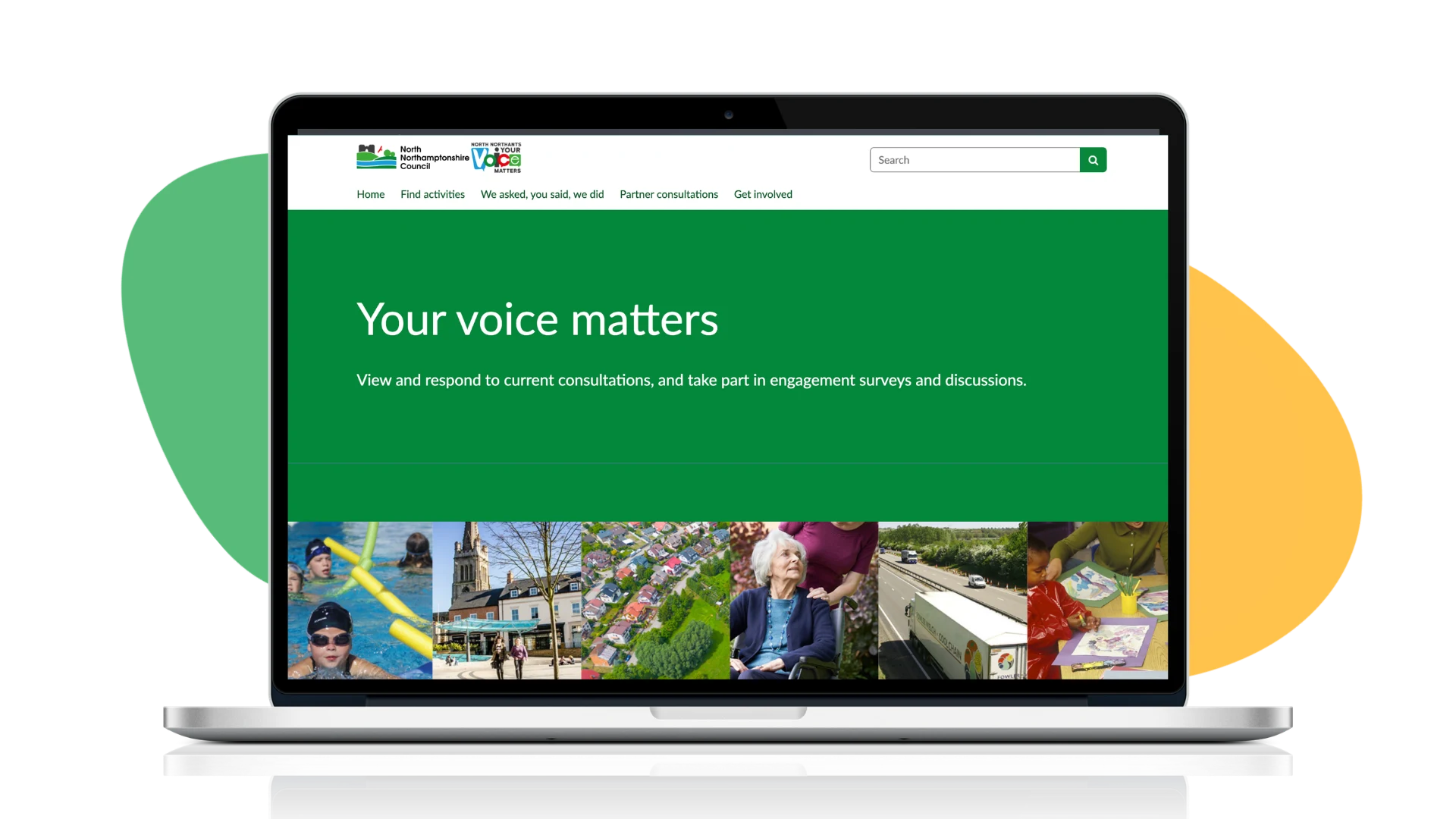
- Publish outcomes where people responded. The council's "we asked, you said, we did" updates link feedback, analysis and decisions on the same page residents used to take part.
- Report split opinion honestly. Publishing disagreement builds more trust than a suspiciously tidy consensus.
- Let routine work carry the culture. Small, frequent consultations on everyday matters normalise participation far more than occasional flagship exercises.
This is the first in our Impact in practice series. Each piece looks at the impact of consultation across a whole organisation, built entirely from the public record.
If you want to receive content like this to your inbox, make sure you’re subscribed to our newsletter.
Image of narrowboat is used under creative commons Attribution 3.0: mick alto4