Local government reorganisation: engagement lessons from North Northamptonshire

Dozens of new unitary councils will hold their first elections in May 2027 and go live in April 2028. One authority that made this journey five years ago left a complete public record of how engagement helped. Here's what it shows.
Local government reorganisation is now a fixed point on the calendar for much of England. Around 20 million people live in the two-tier areas affected. Decisions on new council footprints have been arriving through 2026, shadow authorities will be elected in May 2027, and on 1 April 2028 the predecessor councils will hand over to brand new organisations.
Between now and then, transition teams face a daunting list: aggregating services, harmonising council tax and policies, transferring staff and assets, and standing up an organisation that is safe and legal on day one. Public engagement can look like a nice-to-have on that list. North Northamptonshire Council's experience suggests it's closer to load-bearing.
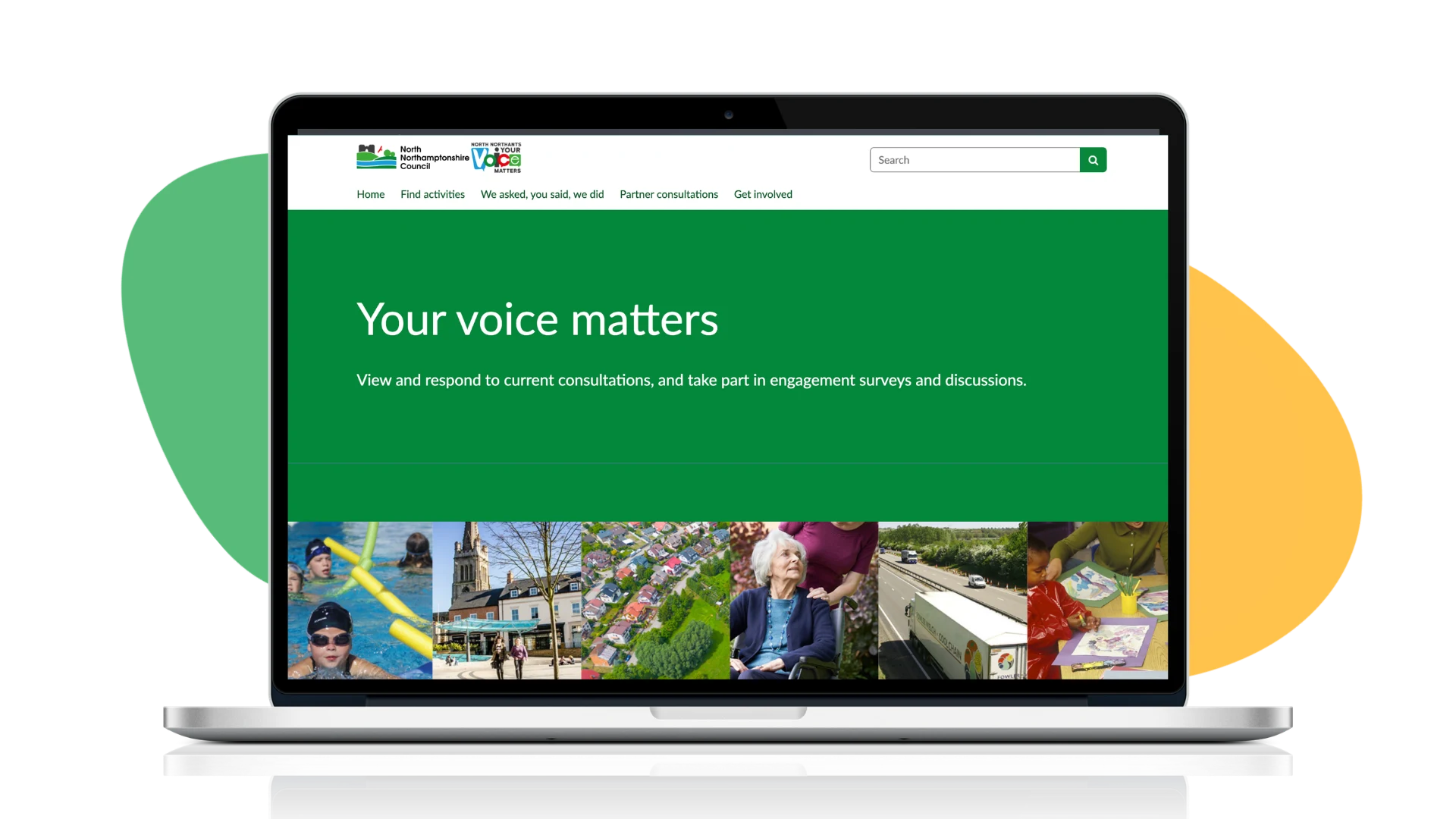
Formed in April 2021 from four predecessor councils, North Northamptonshire has run its consultation and engagement through one public site from before day one. That means its entire journey, from pre-vesting engagement to mature whole-organisation practice, is sitting in a public archive anyone can study. We did. Here's what stands out.

1. Start before you exist
The earliest activities on North Northamptonshire's site predate the council itself. Through 2020, residents of the four predecessor areas were invited to help choose the new council's logo, give views on customer service opening hours, comment on the proposed council tax support scheme, and respond to the first ever draft budget, all before vesting day.
Some of these were big questions and some were small. That was rather the point. A logo vote won't determine anyone's services, but it tells residents of four different areas the same thing at the same time: this new council is yours, and it's listening before it's even open. For a shadow authority in 2027 looking for ways to build identity and legitimacy ahead of vesting day, low-stakes, high-visibility engagement is one of the few tools available that early.
2. Harmonise in the open
Every new unitary inherits the same problem: multiple legacy policies, one set of residents. Government guidance already flags council tax harmonisation and service aggregation as core implementation issues. North Northamptonshire's record shows what it looks like to work through that list with residents rather than around them.
Its 2022 garden waste consultation is a small classic of the genre. It set out plainly that Corby and Kettering had a free year-round service, Wellingborough a seasonal one, and East Northamptonshire a £55 annual charge, then asked people how to make that fair. Taxi licensing followed the same pattern over a longer arc: a consultation on combining four sovereign policies, a fares review across four zones, and eventually a single zone from 2025. Later came leisure contracts, payment options and more.
Harmonisation almost always means someone's arrangements getting worse as someone else's get better. Doing it openly won't remove that pain, but it swaps "the new council took our free service away" for a documented, participatory decision. Five years on, that audit trail still stands.
3. Consult on how you'll consult
In early 2022, the young council consulted on its Statement of Community Involvement, the statutory document setting out how it would engage communities on planning matters. It asked people how it should ask people.
For a new organisation this is a genuinely useful early move, and not only in planning. Four predecessor councils will have had four engagement cultures and four sets of resident expectations. Setting out your intended approach and inviting challenge does two jobs at once: it produces a better framework, and it signals from the start that engagement is part of how the new organisation works.
4. Close the loop from the first consultation
The habit that most defines North Northamptonshire's mature practice is publishing outcomes where people responded. Its use of Citizen Space’s native "we asked, you said, we did" updates link feedback, analysis and decisions on the same pages residents used to take part. When its 2026/27 budget consultation closed, the analysis went into the formal committee papers and an outcome update appeared on the consultation page within days of the decision, including the finding that opinion on the council tax rise was almost evenly split.
Publishing disagreement builds more trust than a suspiciously tidy consensus. And for a new council with no track record, trust is the scarcest resource of all. Every closed loop in year one is a deposit; the earlier the habit starts, the more it compounds.
5. Choose infrastructure that handles every weight of task
A final, practical lesson. In its first years the new council needed to run everything from statutory neighbourhood plan publicity and environmental permit notices to quick surveys about play equipment and post-election voter feedback. It ran all of it through Citizen Space.
That flexibility matters more during transition than at any other time. New teams are forming, workloads are unpredictable, and nobody has capacity to procure and learn separate tools for light engagement and heavy statutory process. One front door for residents also does quiet identity work: whatever the question, wherever you live in the new area, you go to the same place, and you can see what happened as a result.
The window is now
Shadow authorities will exist from May 2027 and North Northamptonshire's archive shows that the engagement clock can usefully start well before either date, and that decisions made in the transition period about how a new council listens will shape its relationship with residents for years.
New councils will get one chance to make a first impression on their residents. The evidence from one that's been through it suggests the strongest first impression is a question.
If you're a council preparing for reorganisation and thinking about how engagement fits into your transition, we'd be glad to help. Citizen Space has supported new unitaries from before day one, and we've seen most of what the journey involves. Book a demo to start a conversation about what your new organisation might need.