What can "Manchesterism" tell us about Burnham's leadership style?
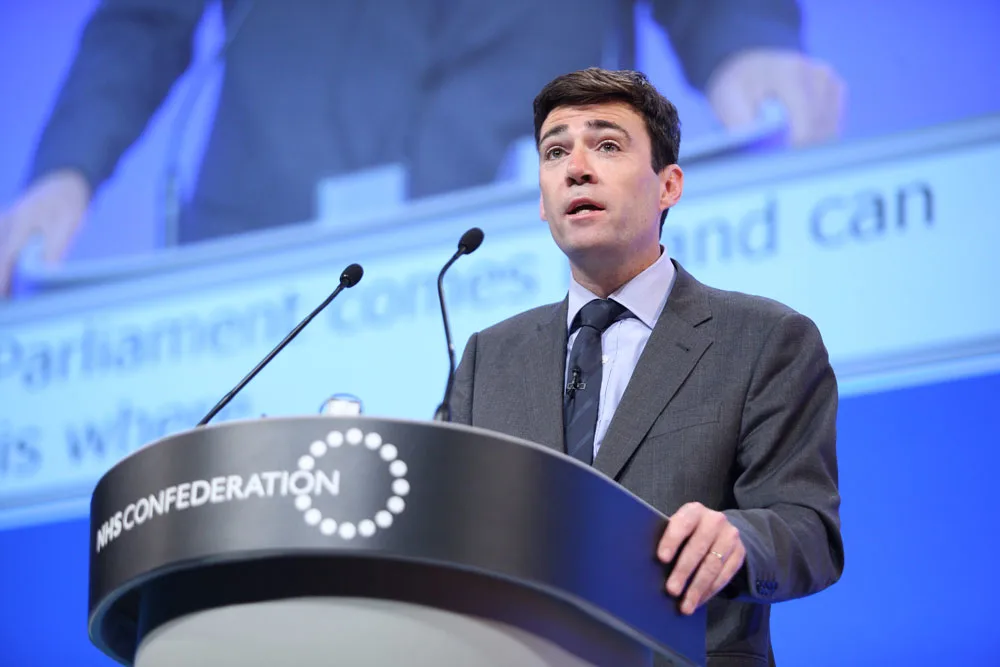
After the Makerfield by-election put Andy Burnham back in Parliament and a Labour leadership contest into motion, one word keeps surfacing in the coverage: Manchesterism. It's being used as shorthand for a whole approach to governing, but it's rarely unpacked. So we went looking at the source material to understand what it actually describes, and what it might tell us about how its best-known practitioner leads.
Where the word comes from
"Manchesterism" has two reference points worth knowing about.
The first is a recent report, The Productive State: A Framework for Manchesterism, by Mathew Lawrence and Alex Williams, published by Mainstream. It's an economic argument about public ownership of essentials, city-region devolution, and rebuilding state capacity.
The authors are insistent that Manchesterism is "a substantive democratic project: not the devolution of power as such, but the design of institutions through which devolved power is continuously held to account by those it governs." The interesting move there isn't the transfer of power downward. It's the argument that power devolved without genuine accountability mechanisms is hollow. Devolution only means something if the people on the receiving end have real, ongoing voice.
The second reference point is closer to home for us: the Greater Manchester Participation Playbook, published in late 2025 by the Greater Manchester Combined Authority, one of our customers. It opens with a short foreword under Burnham's name, and that foreword is probably the clearest one-paragraph statement of the philosophy you'll find anywhere:
"When power is devolved not just to regions but to people, it can transform lives and rebuild trust in politics. When you trust people, they rise to the challenge."
Read those two sources together and a leadership style starts to come into focus. Less "what should the state own" and more "how should decisions get made, and who gets to be in the room."

Four things the source material reveals
1. A diagnosis that starts with trust, not policy.
The Playbook is unusually blunt about the problem it's trying to solve. It states plainly that public trust is falling and that participation in traditional democratic processes, like voting, has reached historic lows, and frames the whole project as a response to decisions having been made "about people, not with them." That's a distinctive starting point. It treats disengagement and distrust as the core problem to be governed around, rather than a side-effect to be managed. A leadership style built on that diagnosis tends to reach for engagement first and announcement second.
2. Devolution as a means, not an end.
It would be easy to read Manchesterism as simply "move power out of Westminster." But the source material is careful to reject that. The Productive State essay explicitly warns against confusing devolution with democracy. The postwar nationalised industries, it argues, failed partly because accountability "ran upward to ministers rather than outward to the workers and communities the institutions served." The leadership lesson embedded there: shifting power geographically achieves little unless you also build the mechanisms for people to shape and scrutinise how it's used. Pushing decisions closer to people is the easy half. Designing how they get a say is the hard half, and the half that matters.
3. "Show, don't tell" through demonstrated results.
Both documents lean heavily on examples rather than theory. The essay points to Greater Manchester's Bee Network, where bus services were brought back under public control, and argues that "institutional change propagates through demonstrated results that shift what is considered possible." The Playbook is wall-to-wall local case studies: a £200,000 participatory budgeting programme in Cheetham where over 100 young people voted; £65,000 put in the hands of residents in Little Hulton; a citizens' assembly of twelve people shaping energy governance. The consistent instinct is to prove a method works at small scale, then let the evidence build the appetite for more. It's a governing style that prefers a working pilot to a white paper.
4. Closing the loop is non-negotiable.
Perhaps the most practically revealing thread is the insistence on feedback. The Playbook's participatory budgeting model doesn't end at the vote. It includes a "deliver" stage where those who received funding "later feed back on what was achieved," and stresses that tracking and sharing outcomes is "crucial for transparency, trust and encouraging ongoing involvement."
It signals a leadership style that treats the moment after a decision, telling people what their input changed, as just as important as the decision itself. It's also, not coincidentally, the part many organisations skip.
So what does it add up to?
If you take the source material at face value, the leadership style it describes is one that treats participation as infrastructure rather than decoration. It assumes that trust is rebuilt through repeated, visible, accountable acts of involving people, not won in a single campaign. It prefers demonstrated results over grand plans. And it holds that the loop has to be closed: people need to see what their voice changed, or they stop offering it.
Whether that approach scales from a city-region to a country is exactly the open question the coming months will test, and the essay's own authors are candid that the Greater Manchester programme has so far been "constrained to demonstrating the principle rather than delivering it at full scale." That's a genuine, unresolved debate, and reasonable people land on different sides of it.
But here's the part that holds regardless of how the politics shakes out, and the part we care most about: whoever leads, and whatever they call their approach, a style of government built on involving people only works if someone can actually do the involving, well, at scale, and to a standard the public can trust. That work doesn't happen at a podium. It happens in the consultation teams, the engagement officers, and the policy units who have to turn "we'll listen to people" into an accessible survey, a fairly run assembly, a defensible analysis of ten thousand responses, and an honest "here's what you changed."
That's the unglamorous craft underneath any participatory ambition.
Delib is the UK's leading independent provider of consultation and engagement software for government. We build the tools, like Citizen Space, that help public-sector teams run the dialogue between citizens and government. To see our platforms in action, book a demo.
Image of Andy Burnham is used under the Creative Commons licence. Credit to NHS Confederation
