How a custom activity template helped SEPA transform their permit process

The challenge
Every time the Scottish Environment Protection Agency (SEPA) needed to open a new permit consultation, someone has to begin a repetitive and manual process.
They'd find an existing consultation, clone it, work through the content deleting what didn't apply, carefully type in the specific details like location, authorised place and reference numbers, and then hope nothing had been missed. When the consultation closed, they'd manually copy the link and move it into the right section of the page. When it was granted, they'd do it again. When something changed, they'd do it again.
It worked. But only just. The process was time-consuming, prone to human error, and entirely dependent on someone remembering exactly what needed to be updated each time. For an organisation managing dozens of permit consultations across multiple regulatory areas, that was an unsustainable way to operate.
With the flexibility of our new custom activity types service, we knew we could design something better. Something bespoke that would just work.
The approach
Before building anything, the Delib team sat down with SEPA to understand the full lifecycle of a permit consultation. Not just what happens inside Citizen Space, but everything that leads up to it and everything that follows. We mapped the process end-to-end: from the moment a permit application arrives, through the public consultation window, right through to the final decision.
That conversation surfaced something important early on. The instinct had been to create one universal template, a single flexible consultation form that could handle any permit type. It was a neat idea but in reality, it didn’t really fit.
SEPA's permit landscape spans five distinct categories: Aquaculture, Water, Industrial Activities, Waste, and IED (Industrial Emissions Directive, essentially a second stage of consultation for certain industrial permits). The content on the overview page for each one is fundamentally different. The default questions are different. The regulatory context is different. Trying to squeeze all of that into a single template would have created something technically unified but practically unworkable.
So the team made a pragmatic call: build one template properly, validate the approach, and use that as the blueprint for the rest. We started with Aquaculture.
The Aquaculture template was more complex than it first appeared. Even within a single permit category, there are three distinct permit types: a new application, an application for a variation, and a SEPA-initiated variation. Each one requires different information on the overview, and each one changes what appears in the Application Details section.
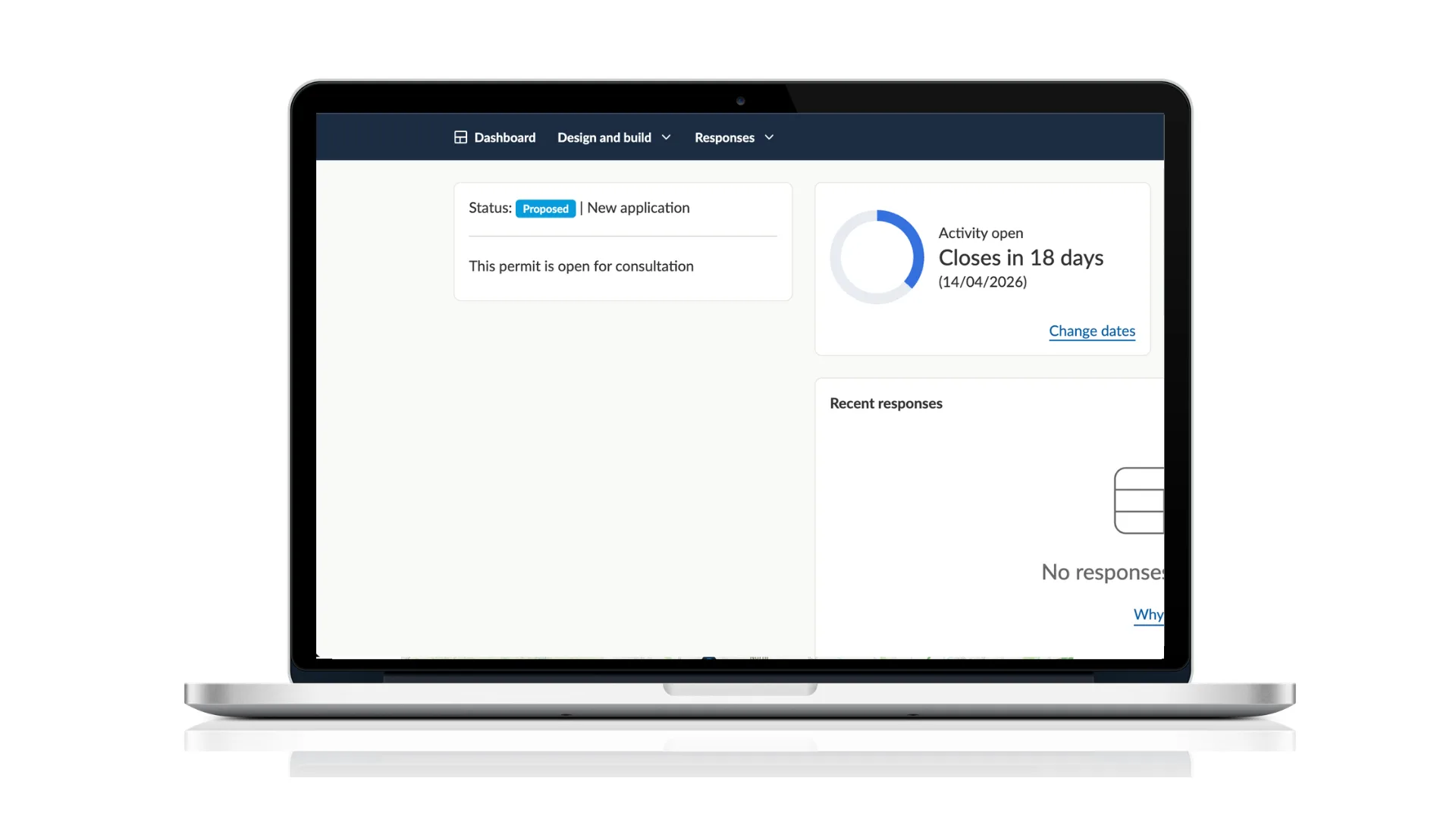
Rather than leaving staff to navigate that complexity manually, the Citizen Space template was built to handle it automatically. When someone creating a new consultation selects the permit type, the relevant content populates instantly. With the click of a button the permit has the correct introductory copy, the right application details, the appropriate questions. Change the permit type, and the content updates accordingly.
No copy-pasting. No deleting the wrong paragraph and no accidentally leaving in last month's reference number.
The team also tackled the date problem. SEPA permit consultations are always open for exactly 28 days. Previously, someone would have to look at a calendar and work out the closing date themselves and enter it manually. Now, when the opening date is set, the system calculates and fills in the closing date automatically.
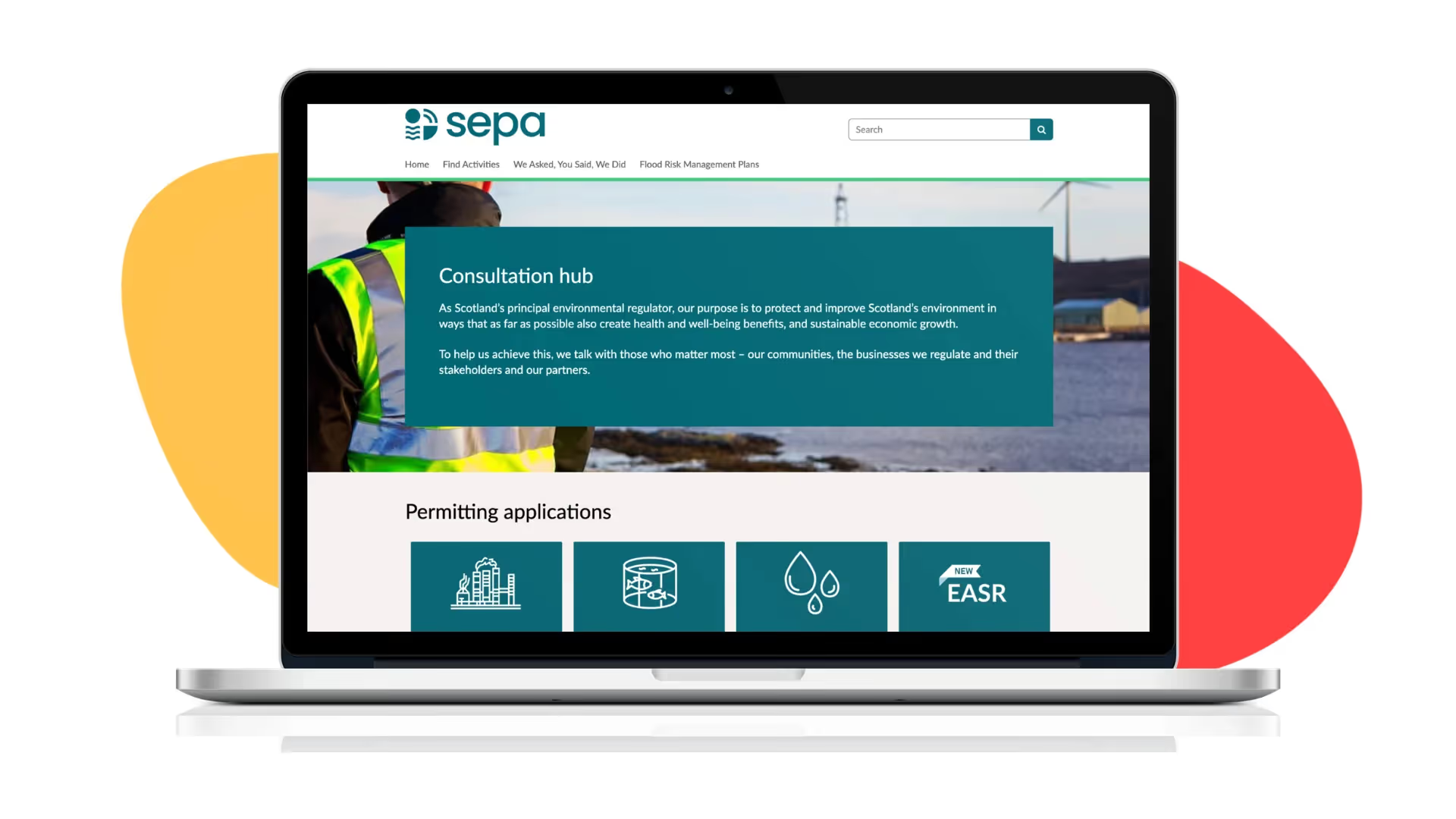
And on the front end, the public-facing landing page, a consultation hub was built that organises permits by status: Proposed, Under Review, Granted, and Refused. As a consultation moves through its lifecycle, it moves through these categories automatically, with no manual intervention required.
The results
Now the process takes around ten minutes.
They open a new activity, select the permit type, and the dashboard immediately tells them exactly what information they need to provide. The overview content is already there. The application details section is already populated with the right copy for that permit type. They fill in the specific details such as reference, location and site information, set the opening date, and the closing date takes care of itself. Add an audience, confirm the permit interest, and publish.
From there, the system does the heavy lifting. When the consultation closes, the permit moves automatically from Proposed to Under Review on the public landing page. When a decision is made, whether that is a grant or a refusal, the status updates, the landing page reflects it, and the relevant section is updated without anyone having to touch a link.
For SEPA, the change is significant. A process that previously demanded careful manual management at every stage has become something they can trust to behave correctly. The risk of error is lower. The time investment is smaller.
And the public-facing experience is cleaner and more consistent.
Impact
SEPA's permit workflow is a good example of the kind of challenge that looks straightforward on the surface, surely it's just a form, but contains layers of business logic that only emerge when you take the time to really understand how an organisation works.
This is where Delib's approach makes the difference. With over 20 years of experience supporting public sector consultation and engagement, and a team that spans software engineering, UX, content design and customer success, Delib doesn't just provide a platform. We work closely with our customers to understand their goals, map their processes, and build solutions that fit around the way people actually work.
Citizen Space is designed to support exactly this kind of customised workflow, from templated activity types and automated status management through to configurable dashboards and seamless integration with existing systems. And because every customer gets a dedicated Customer Success Manager throughout their subscription, support like this is built into the relationship from day one.
SEPA were delighted with the outcome and with four more permit templates still to build, the work continues.
Delib is a govtech leader specialising in consultation and engagement, trusted by over 600 government organisations worldwide, including major planning projects. Since 2004, we've been building secure, accessible digital platforms to make participation simpler, fairer, and more inclusive. Our flagship product, Citizen Space, was built in collaboration with the UK government and has supported more than 11 million responses across over 110,000 democratic activities.