Supporting Aotearoa's climate action with transparent, evidence-based consultation

The challenge
He Pou a Rangi, the Climate Change Commission, is an independent body that provides evidence-based advice on climate change to New Zealand's government. Genuine public engagement is integral to their work because, in their words, "we are committed to a fair and equitable transition for current and future generations. We take a wide systems view so we understand what our advice means for our people, our environment, our land and our economy."
With a mandate extending to 2050 and beyond, the Commission needed a platform that could support regular, large-scale consultations on complex policy matters, manage thousands of submissions efficiently, and publish responses transparently whilst maintaining rigorous analysis processes.
The approach
The Commission uses Citizen Space as their central platform for digital consultation and engagement on climate action for Aotearoa. The platform supports their extensive engagement process, which includes meetings, workshops, hui and calls for evidence alongside digital consultation.
They use Citizen Space to run consultations on major pieces of work including emissions budgets, emissions reduction plans, the 2050 emissions reduction target, and national climate change risk assessments. The platform allows them to collect structured feedback, manage complex policy consultations, and publish submissions transparently.
Their approach combines broad public consultation with targeted engagement. For their work on emissions reduction plans, they analyse submissions according to Māori data sovereignty principles under technical guidance from Māori data scientists, and run targeted consultation surveys for Iwi and Māori to identify significant issues.
The results
Since their establishment, the Commission has run multiple major consultations through Citizen Space:
Ināia tonu nei (2021), their first package of advice to government, received more than 15,000 submissions from around the country, including Iwi and Māori, stakeholders and organisations. The final advice was delivered to the Minister of Climate Change and tabled in Parliament in June 2021, setting out ambitious and achievable paths for Aotearoa to meet its climate targets.
Draft advice on the second emissions reduction plan (2023) received approximately 300 submissions, around half from businesses and business groups, a third from individuals, and the remainder from local government, Iwi and Māori, universities, NGOs and advocacy groups. The consultation feedback led to new recommendations on aligning institutional and regulatory outcomes, investment and finance, the circular economy and bioeconomy, and research, science, innovation and technology. The finalised report was released in December 2023.
Fourth emissions budget and 2050 target review (2024) consulted on three interconnected pieces of advice: the fourth emissions budget (2036 to 2040), review of the 2050 emissions reduction target, and whether emissions from international shipping and aviation should be included in the 2050 target.
National Climate Change Risk Assessment (2025) included a call for evidence that closed in March 2025, followed by recruitment of expert working groups to ensure the evidence base is balanced and the assessment is rigorous.
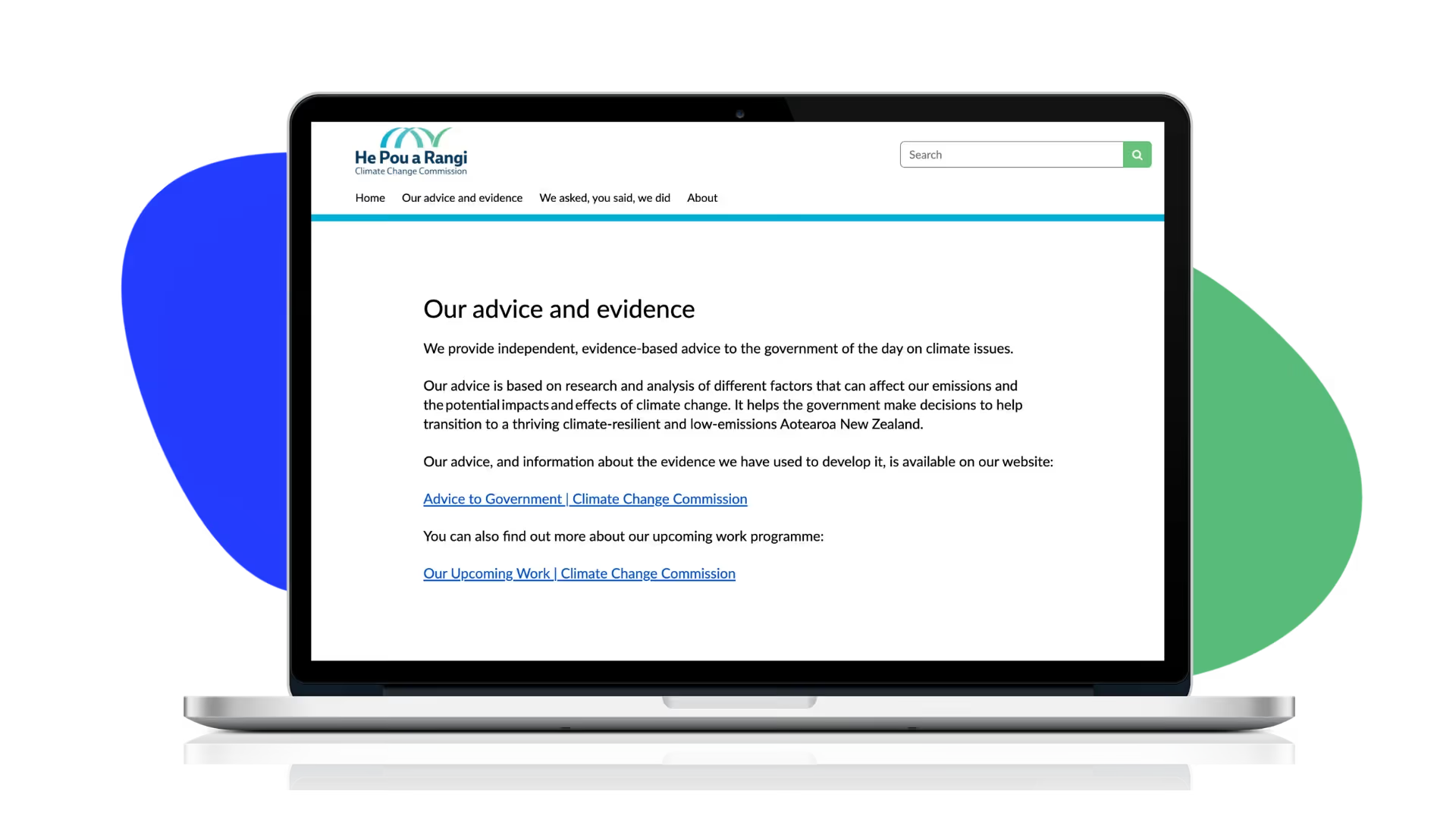
The Commission publishes all submissions where consent has been given, maintaining transparency throughout their process. Their "We asked, you said, we did" approach shows how public input shapes their advice to government, with clear documentation of how consultation feedback influences final recommendations.
Running ongoing policy consultation?
Independent bodies and government agencies need platforms that can support long-term consultation programmes on complex policy matters. Citizen Space gives you the tools to manage large-scale public engagement, analyse submissions rigorously and maintain transparency over years of work.

The Climate Change Commission will be around for a long time. As a country, our approach to climate change is planned out until 2050 and beyond. We consult with the public regularly. Our mandate is to hear all New Zealanders' perspectives before making recommendations to government.
Delib is a govtech leader specialising in consultation and engagement, trusted by over 600 government organisations worldwide, including major planning projects. Since 2004, we've been building secure, accessible digital platforms to make participation simpler, fairer, and more inclusive. Our flagship product, Citizen Space, was built in collaboration with the UK government and has supported more than 11 million responses across over 110,000 democratic activities.